A supplier may answer “packaging validated” with a brochure, a standards declaration or a laboratory summary. These are different kinds of evidence. The useful purchasing question is whether the response covers the actual catheter, accessories and pack configuration being quoted, and whether its limits are acceptable for the intended supply route.
This guide develops the packaging row in our urinary catheter procurement evidence matrix. It gives the buyer a way to organize a supplier response before a pilot or contract award. It does not rank vendors, estimate infection reductions or assert that Silicon Life has performed any particular packaging test.
What does a sterile label tell the buyer?
Treat the label as the manufacturer’s stated status, then ask for the supporting packaging scope. A symbol is not a measured result for the offered pouch, proof that a particular shipment is undamaged, or a substitute for the device’s current labeling. CDC identifies packaging damage, moisture, handling and transport conditions as relevant to sterile-item integrity.9
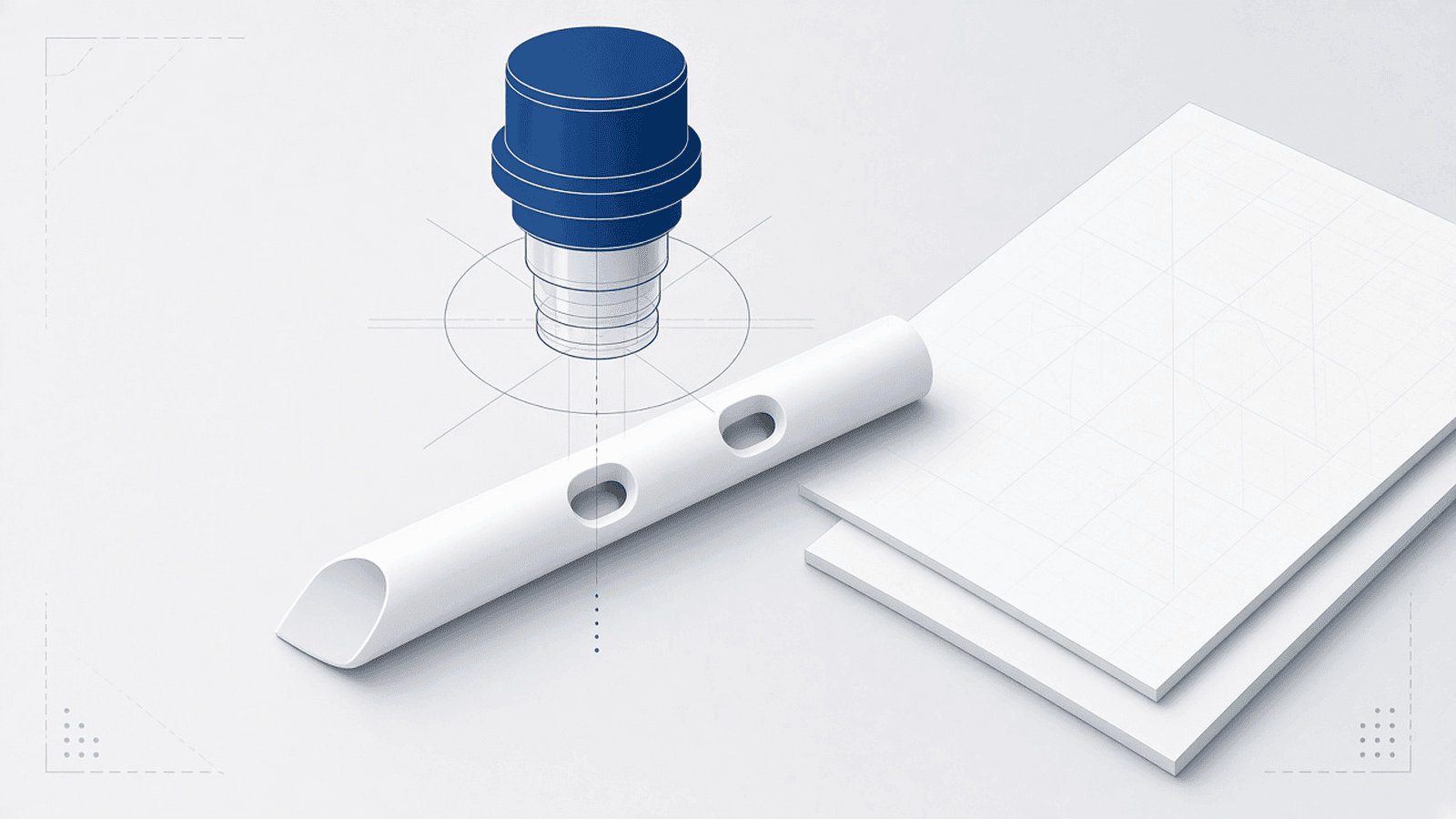
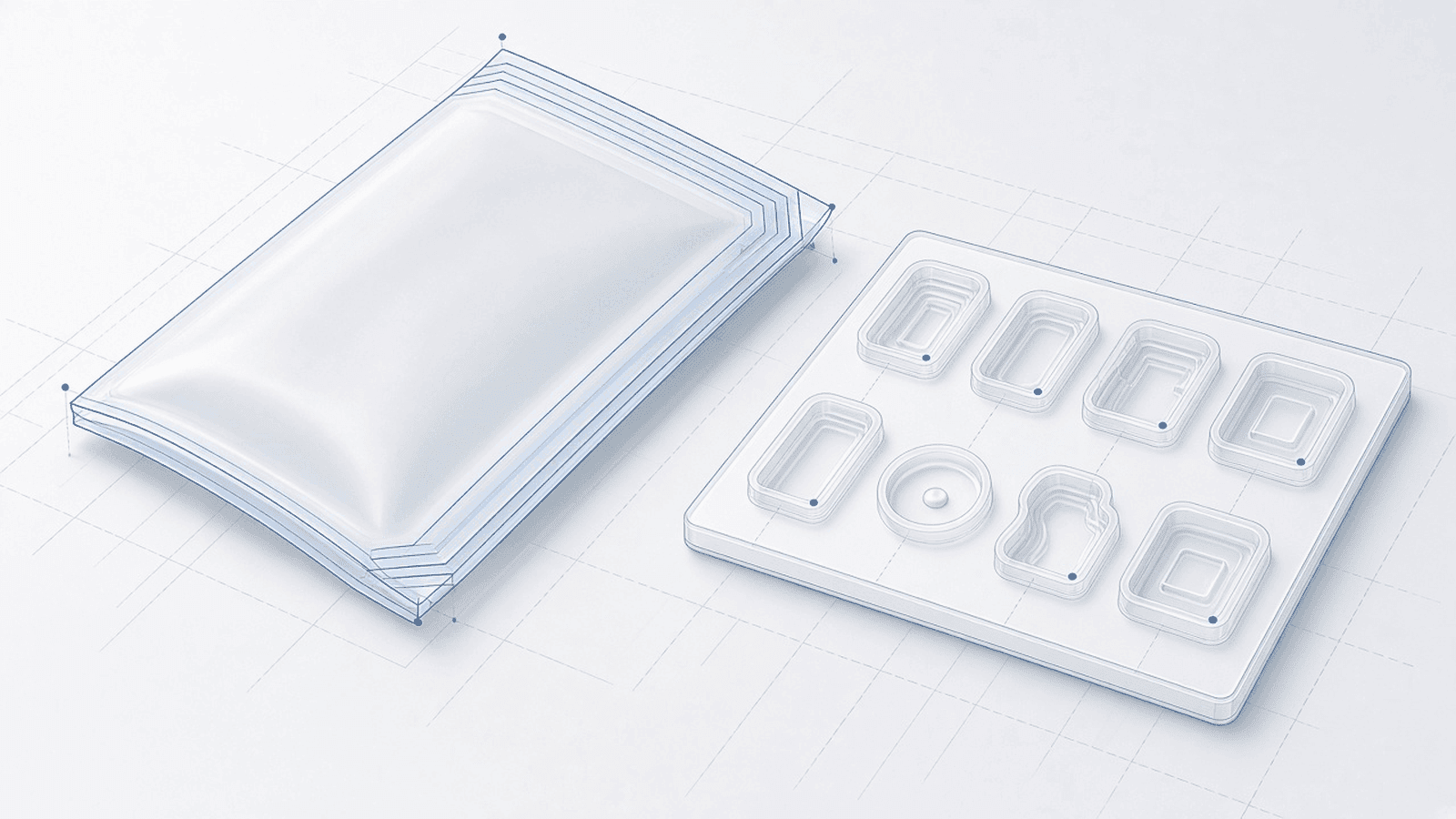
For the document request, distinguish the individual sterile barrier from the cartons that protect it during storage and delivery. Ask the supplier to describe the arrangement rather than guessing from a photograph. A pouch may be one barrier within a larger kit; an accessory may have separate packaging. The buyer needs to know which component each sterile statement covers.
FDA’s September 1994 Foley catheter guidance provides historical device-specific context: Section XII includes packaging materials and a description supporting sterility maintenance among the submission information. The page warns that this guidance predates Good Guidance Practices. It concerns conventional and antimicrobial Foley catheters in the United States, not a worldwide specification for every catheter architecture.1
Use that source as context, together with the later general sterility guidance. Neither document establishes the packaging method used by a China-registered balloon-free catheter. The hospital should ask for the supplier’s actual documents and have its quality and regulatory reviewers assess their applicability.
Which packaging documents should a catheter RFQ request?
Ask bidders to complete the same fields, with a document title, revision and scope for each response. “Available on request” should identify the access route and reviewer, so a confidentiality restriction does not silently become an accepted technical gap. The table is an editorial request framework; source references explain its basis rather than making every proposed field a legal obligation.
| Purchasing question | Initial document request | Scope check and source context | Limit or escalation question |
|---|---|---|---|
| Which offered item is covered? | Catalogue-to-packaging configuration map, including accessories and protective cartons. | Match quotation, sample pack and document revision. This is a proposed purchasing identity check. | If one family member represents others, request the coverage rationale; identical dimensions are not assumed. |
| How is the barrier intended to maintain sterility? | Packaging description and applicable conformity declaration or method summary. | Identify barrier materials, pack arrangement, standard editions and stated exceptions. FDA Section V.A.5 and ISO public scopes provide context.234 | A declaration is a documented assertion with a defined scope; it is not the underlying validation report or a guarantee for each shipped unit. |
| Does the evidence address distribution? | Distribution-conditioning description linked to the associated package-integrity method and summary. | Ask which shipping configuration and exposure conditions were assessed. FDA footnote 16 links simulated distribution and integrity.2 | Does the offered shipping arrangement fall within that scope? A test result does not cover every possible transit event. |
| Does it address the claimed packaging expiry? | Aging basis and associated seal-strength method; supporting summary where needed. | Link the stated packaging claim to the tested configuration and conditioning. Keep aged-device performance separate.7 | A seal-strength result does not by itself establish every integrity endpoint or retained catheter function. |
| Can the pack be presented as intended? | Packaging layout and relevant presentation-evaluation summary, if available. | Ask how the intended user, opening arrangement and included items were represented. This is a proposed usability evidence request. | A laboratory peel-force value alone does not establish successful presentation by intended users. |
| Does the label match the bid? | Destination-market label and packaging artwork for the offered model. | Reconcile identity, sterile status, expiry, quantity and dimensions. Historical US Foley label examples are in Section VI.A.1 | Label review does not establish barrier performance or market authorization. Resolve differences before accepting the configuration. |
Source: Silicon Life editorial synthesis. Proposed purchasing requests informed by FDA guidance and public ISO scopes; acceptance criteria belong to the applicable supplier evidence and hospital review.
Keep the resulting register usable: one row per unresolved question is usually clearer than collecting reports without recording what they answer. For each gap, assign a quality or engineering reviewer, the exact document requested, a response date and a disposition such as “scope confirmed,” “clarification needed” or “not covered.” These are suggested workflow statuses, not a certification scheme.
Do not treat a missing full report as automatic proof that validation was not performed. A supplier may offer a signed summary, controlled review or redacted report. Equally, a polished report should not close a gap if the test article or conditioning does not represent the quoted product. Record both document access and technical adequacy.
Why distinguish integrity from seal strength?
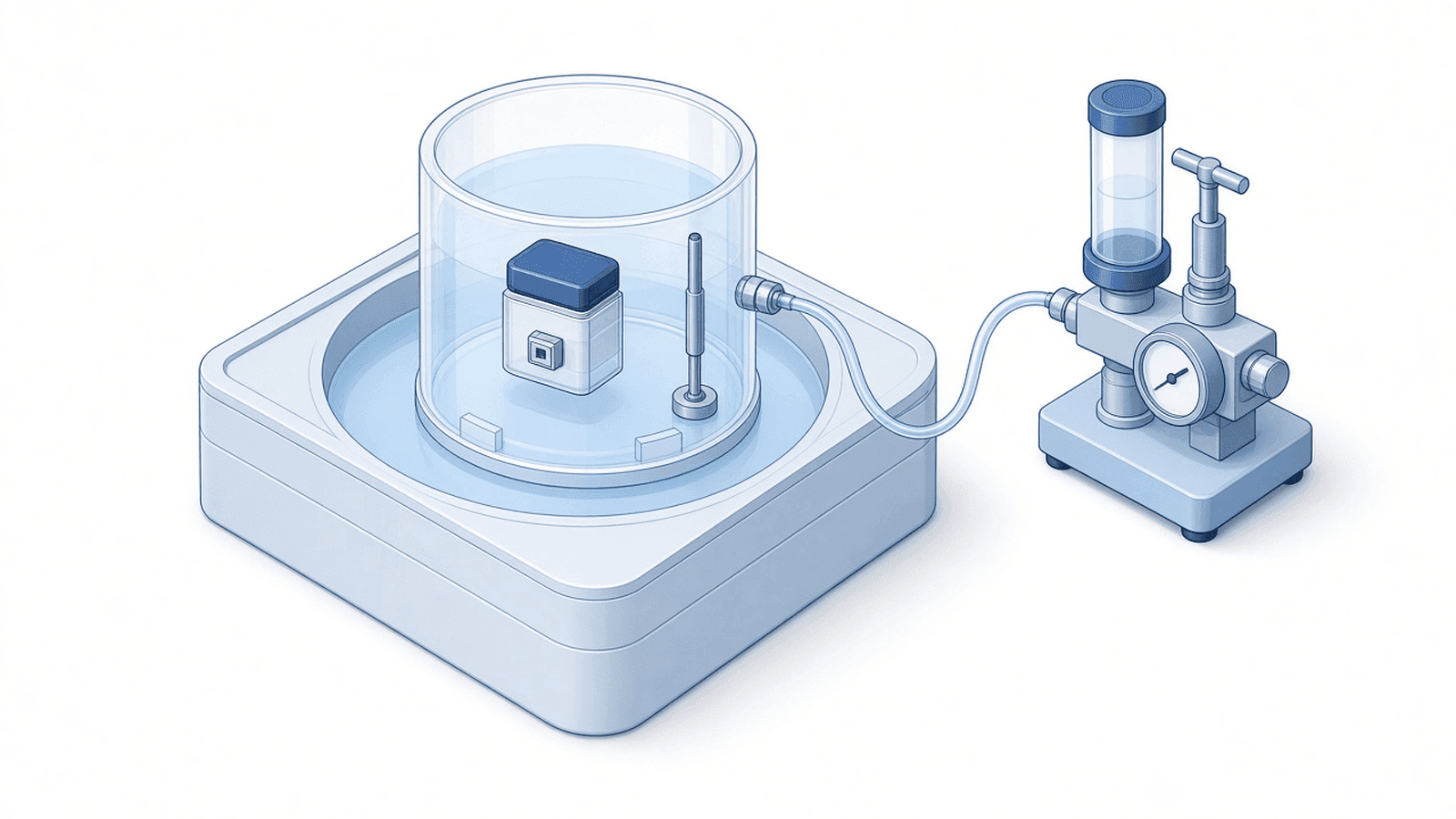
FDA’s January 2024 guidance, Section V.A item 5, recommends a packaging description and test-method description rather than package test data in a 510(k). Footnote 16 pairs simulated distribution with package integrity and simulated and/or real-time aging with seal strength.2 These are useful questions for a purchasing file, while the applicable regulatory submission and the hospital’s own review remain separate decisions.
Seal strength addresses a mechanical measurement. FDA’s recognition record for ASTM F88/F88M-23 describes force to separate a sealed test strip and identification of the failure mode. The record lists complete recognition, number 14-596, with entry dated December 18, 2023.5 That recognition describes a standard’s status, not a supplier’s test result or a catheter authorization.
An integrity method asks a different question from a force measurement. FDA’s Special 510(k) guidance includes an example using ASTM F2096 for gross leaks and ASTM F88/F88M for seal strength.6 Those examples do not prescribe a universal method for every pouch. Ask the supplier why its selected method fits the materials, seal configuration and defects being assessed.
For a summary that reports “pass,” request the method identity, tested condition, sample basis, assessment criteria and result. For a force value, request its units and the criterion against which it was assessed. Do not compare numbers from unlike setups as though a larger value automatically makes one package better. A strength measurement cannot answer every question about barrier continuity or presentation.
Keep any conclusions within the tested scope. Distribution assessment does not guarantee survival of unlimited mishandling; aging evidence does not promise permanent barrier performance. This guide supplies no universal peel-force limit, detectable-defect size, sampling threshold or accelerated-aging formula. Those details require the applicable method, product rationale and qualified technical review.
What do the public ISO scopes establish?
ISO’s public catalogue identifies ISO 11607-1:2019 as addressing materials and packaging systems intended to maintain sterility of terminally sterilized devices to use. It identifies ISO 11607-2:2019 with development and validation of forming, sealing and assembly processes. Both catalogue entries state confirmation in 2024 and list a 2023 risk-management amendment.34
These public abstracts establish the standards’ subject matter. They do not provide a complete procedure, acceptance criteria or evidence that a particular supplier complies. Request the edition and amendment status actually claimed, and ask the supplier to explain differences from the standards applicable to the intended regulatory submission or contractual specification.
- Part 1 does not cover all requirements for aseptically manufactured devices; this is a limit of coverage, not a blanket exclusion of every such package.3
- Part 1 does not apply to systems used to transport contaminated devices for reprocessing or disposal. It also does not describe a quality assurance system for every manufacturing stage.3
- A packaging declaration should be read for its named products, configurations and processes. Ask separately about retained device performance; FDA’s town hall distinguishes aged-product testing from sterile-barrier shelf-life evidence.7
The public sources are sufficient to frame document requests, but not to audit compliance clause by clause. No paywalled standard text or numerical clauses were used for this guide. Before a contract or submission relies on a standard, the responsible reviewer should use the applicable authorized edition and verify its current status.
How much evidence should the hospital request?
The following stages are a proposed purchasing workflow. FDA’s February 2024 town hall explains that ISO 11607 conformity declarations can describe packaging test methods in a 510(k). That statement addresses submission content; it does not say a hospital must accept a declaration as sufficient for its purchasing question. The same discussion distinguishes PMA and De Novo submissions, which should include complete methods and data.7
- Initial response: Obtain configuration identity, packaging description, method or conformity statement, editions and limitations. Decide what the response covers before scoring it. A general quality certificate can accompany this file, but should not replace the packaging response.
- Focused summary: Where coverage is unclear, ask for the relevant validation summary: test article, conditioning, methods, assessment criteria, results, deviations and coverage rationale. Explain the question, such as whether an included rigid accessory was represented. A new vendor or unfamiliar geometry can justify closer review without proving a defect.
- Report review: Request the relevant complete reports or controlled technical access when a summary leaves a material question unresolved, a configuration changes, or receiving observations contradict the stated scope. Agree who reviews the evidence and what decision it must support.
Avoid treating these as a rigid ladder that forbids early access to reports. Some contracts or risk assessments may justify that access at the start; other purchases may be resolved with a well-scoped initial response. Set the request according to the actual uncertainty, rather than vendor size, a generic shelf-life duration or the volume of paperwork.
A configuration mismatch: a worked purchasing example
Consider a hypothetical bid offering a catheter together with a separately listed insertion accessory. The supplier provides a packaging declaration for the catheter family and a summary naming only the catheter pouch. The buyer cannot tell whether the accessory is outside that barrier, individually packaged, or included in the tested arrangement. No failure has been demonstrated, but the submitted scope does not yet answer the bid question.
The useful response is to ask for the pack layout and a link between the quoted configuration and the tested configuration. The supplier might explain that the accessory is separately packaged, or provide a justified representative configuration covering the combined pack. The reviewer can then record whether the gap is resolved and what remains outside scope. Requiring every model to have a separate identical test report would miss the point: the issue is defensible coverage.
If the hospital later proposes a different outer-carton count, ask whether that shipping arrangement remains within the assessed scope. Keep any resulting change decision with the purchasing record. This example is a document-review scenario, not a finding about a named vendor or instructions for assembling a sterile kit.
Which label details should be reconciled?
Request the current label for the intended destination and exact offered configuration. As a historical US Foley example, Section VI.A lists manufacturer identity, sterile status, expiration, single-use designation, quantity, dimensions, intended use and applicable coating information.1 This is not a universal unit-pouch template, and balloon fields should not be imposed on balloon-free designs.
Compare the quotation, sample and technical response. Are catalogue identifiers consistent? Is the stated expiry the one addressed by the packaging evidence? Are accessories and their sterile status clear? Record discrepancies for resolution by the responsible quality and regulatory reviewers. Do not infer authorization from a barcode, standard number or sterile symbol.
How should receiving observations feed back into review?
CDC advises checking packaged sterile items for lost integrity, including wet, torn or punctured packaging.9 For a supplied single-use catheter, a compromised pack should be kept out of clinical use and managed under the manufacturer’s instructions and local quality procedures. General guidance on reprocessing healthcare packs is not permission to reprocess this product.
A proposed receiving record can capture the affected catalogue and lot identifiers, whether damage is on the shipper or individual barrier, photographs, units examined, units affected and storage or delivery observations. Name the person responsible for supplier follow-up. A crushed outer carton calls for assessment; it does not itself prove that every sterile barrier inside has failed.
Agree defect handling, review ownership and escalation before delivery. There is no universal percentage of carton crush or acceptable defect count in this guide. Record observations without claiming a visual check establishes microscopic integrity. If an observation is uncertain, keep the affected stock on hold pending the appropriate quality decision rather than interpreting appearance as a laboratory result.
Document actual rejected stock, handling time or replacement freight separately if these feed a hospital total-cost evaluation. Observed operational inputs can inform purchasing; packaging documents alone do not establish outcome savings or comparative infection rates.
Which questions require separate evidence?
Keep the register focused on the barrier and its configuration. The FDA town hall separates sterile-barrier maintenance from aged-device performance, while the sterility guidance addresses other sterility-related information separately.72 A useful request names the unanswered claim instead of accepting any technical report as interchangeable support.
- Sterilization: Ask for evidence supporting the stated process through the appropriate supplier review. Packaging results alone do not validate the sterilization process.
- Residuals and other biological claims: Identify any separate supplier claim and request its relevant evidence. A barrier result is not a chemical-residual or pyrogen test.
- Device function: Ask separately about performance after storage. Our silicone and latex procurement checklist addresses material-claim appraisal.
- Traceability and authorization: Keep stock identity and destination-market eligibility in their own review fields. Neither replaces packaging validation.
Where Silicon Life fits
Silicon Life develops urological devices and implantable systems, from a balloon-free controlled catheter registered in China to an electronically controlled artificial bladder. Its Disposable Sterile Controlled Catheter is a Class II device registered in China only, for female patients with voiding dysfunction.8 Pipeline programmes remain investigational.
This framework does not assert a Silicon Life packaging test, ISO certification, FDA clearance, CE marking or availability in another market. Teams evaluating the China-only Class II catheter for women with voiding dysfunction can review the controlled catheter product overview and request applicable packaging documentation. Any destination-market authorization question requires its own review before a proposed use or supply arrangement.
Frequently asked questions
Is an ISO 11607 declaration enough?
It can be an appropriate starting response when its scope is clear. It describes the manufacturer’s conformity claim; the hospital still decides whether it answers the purchasing question. Request a summary or report when configuration coverage, methods or results need clarification. Avoid treating the presence or absence of a full report as a verdict by itself.
Can US packaging evidence be reused elsewhere?
It may be relevant evidence for review, but do not assume that the same document meets another market’s requirements or covers another shipping configuration. Ask the destination-market reviewer to confirm applicability and gaps. US source references in this guide do not confer authorization on Silicon Life or any other supplier.
Does packaging validation prove the catheter still functions?
No. FDA’s town hall explicitly treats aged-device performance as a separate shelf-life question.7 A packaging result should be read for its own endpoint and tested configuration. It does not establish retained device function, clinical effectiveness or a comparison with another catheter.
What if sample packs look damaged?
Separate affected packs from usable stock, record the observation and seek the quality decision defined by the supplier instructions and local procedure. Ask whether the observation contradicts the claimed packaging scope. Do not invent a pass threshold from a photograph or assume that an undamaged outer carton proves every pouch is intact.
References
- 1FDA. Guidance for the Content of Premarket Notifications for Conventional and Antimicrobial Foley Catheters. Center for Devices and Radiological Health, September 1994.
- 2FDA. Submission and Review of Sterility Information in Premarket Notification (510(k)) Submissions for Devices Labeled as Sterile. Guidance for Industry and Food and Drug Administration Staff, January 2024.
- 3ISO. ISO 11607-1:2019 public catalogue scope and status; Amendment 1:2023 listed separately; confirmation in 2024.
- 4ISO. ISO 11607-2:2019 public catalogue scope and status; Amendment 1:2023 listed separately; confirmation in 2024.
- 5FDA. Recognized Consensus Standards database: ASTM F88/F88M-23 Standard Test Method for Seal Strength of Flexible Barrier Materials (Recognition List 061, FR Recognition Number 14-596).
- 6FDA. The Special 510(k) Program — Guidance for Industry and Food and Drug Administration Staff, issued September 13, 2019.
- 7FDA. Medical Device Sterilization Town Hall transcript, Center for Devices and Radiological Health, February 7, 2024.
- 8Silicon Life. Disposable Sterile Controlled Catheter product page.
- 9CDC. Recommendations for Disinfection and Sterilization in Healthcare Facilities, Section 18: Storage of Sterile Items. General healthcare-pack integrity context; not authorization to reprocess supplied single-use catheters.
Silicon Life. Sterile catheter packaging: what evidence should accompany an RFQ?. SILICON·LIFE Insights. 7 November 2026.

Silicon Life develops urological devices and implantable systems in Wuhan, China. Its Insights are written for healthcare professionals, with the sources for each article listed in full.
This article is provided for educational purposes for healthcare professionals. It does not constitute medical advice and does not replace the Instructions for Use of any device. Product availability and indications differ by country.
New articles on urology devices and implant engineering.
Clinical reviews, engineering notes and company news from Silicon Life, sent when new articles are published.
Occasional emails. Unsubscribe at any time.