
Bringing artificial organs to clinical practice.
Silicon Life develops urological devices and implantable systems, from a balloon-free controlled catheter registered in China to an electronically controlled artificial bladder.
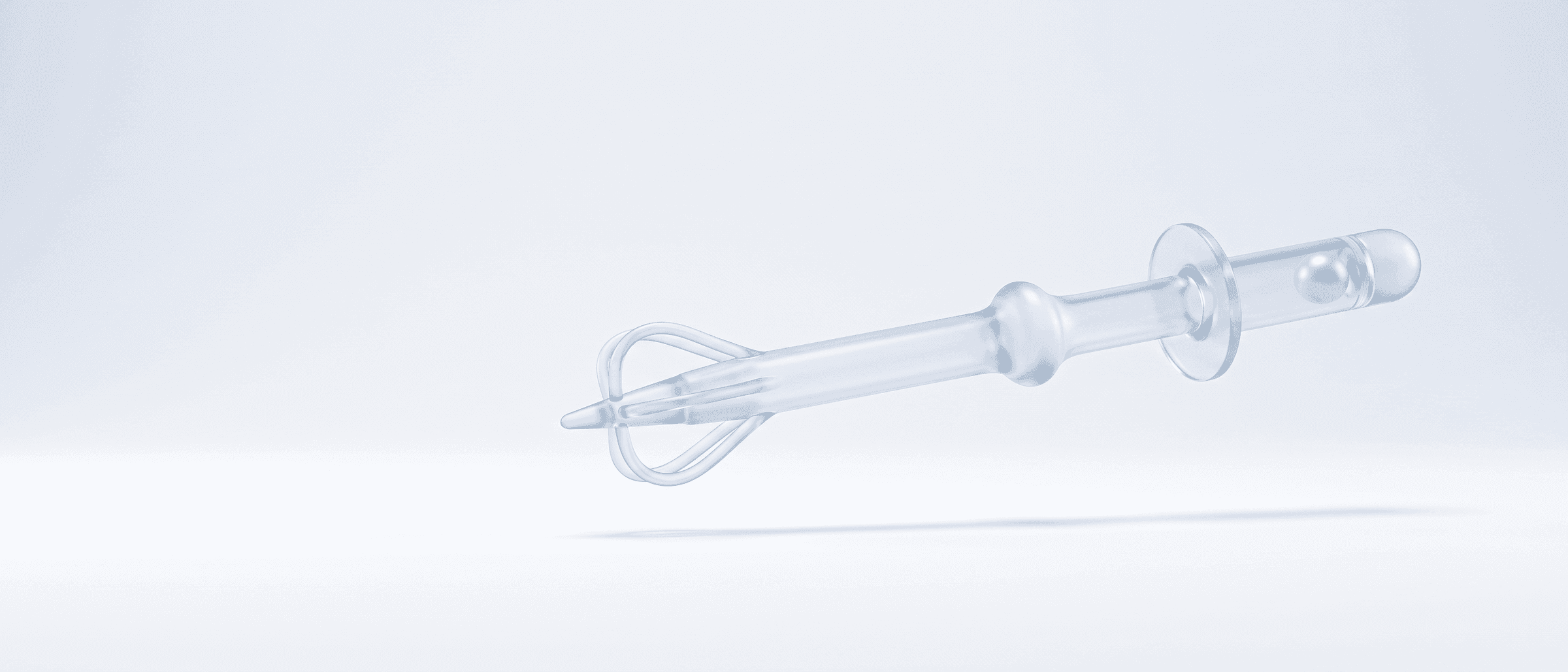
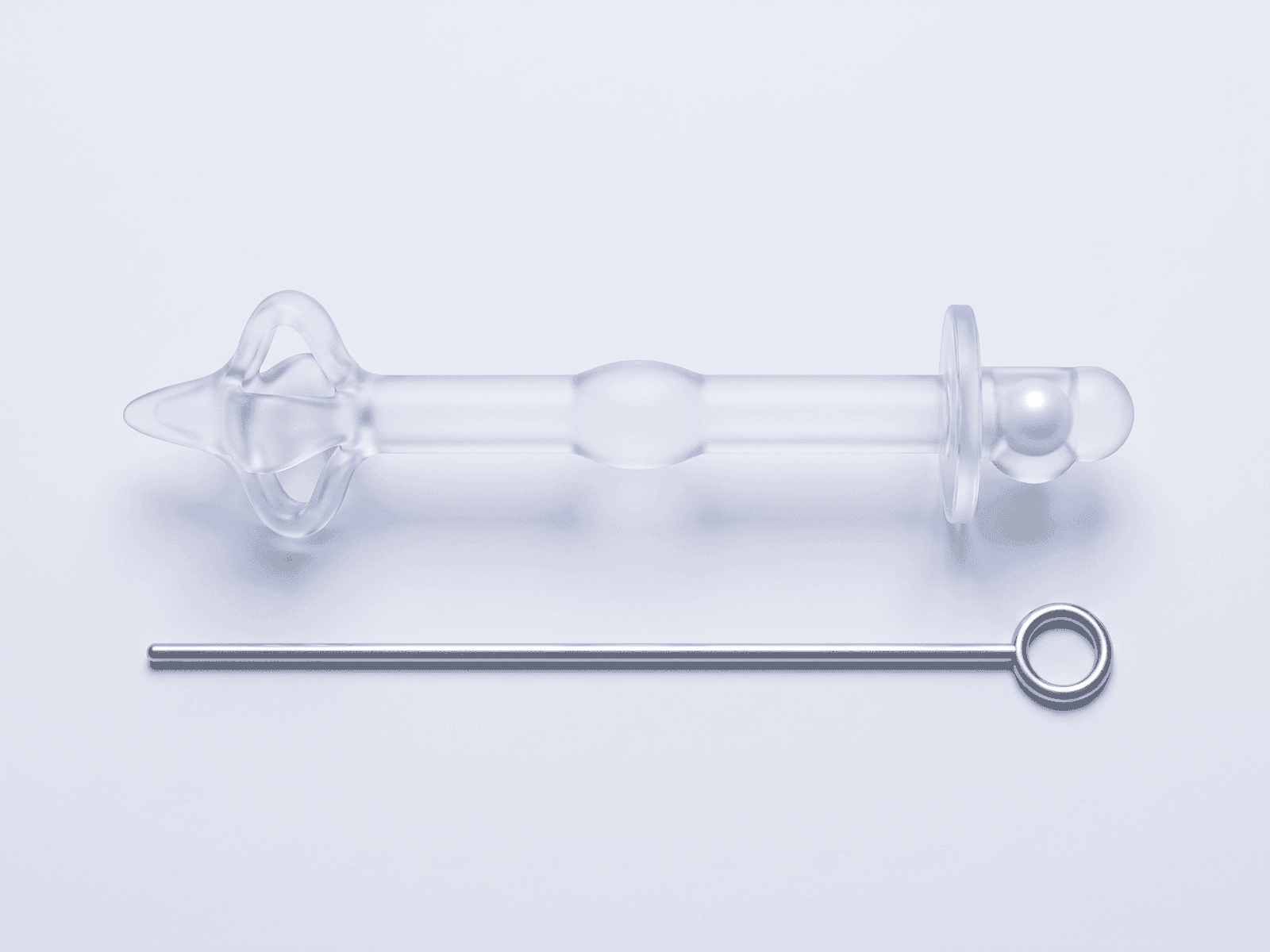
Disposable Sterile Controlled Catheter
One catheter a month. One touch to control.
A balloon-free indwelling urethral catheter with an integrated ball-bead valve. The patient or carer opens the valve to drain the bladder and closes it again afterwards, without an inflation channel or a drainage bag.
Three technologies behind our implantable systems
From catheter to artificial organ
Six programmes extend the catheter platform toward implantable, electronically controlled devices.
Investigational devices. Not approved by any regulatory authority and not available for sale.
Registered in China and evaluated in a clinical study
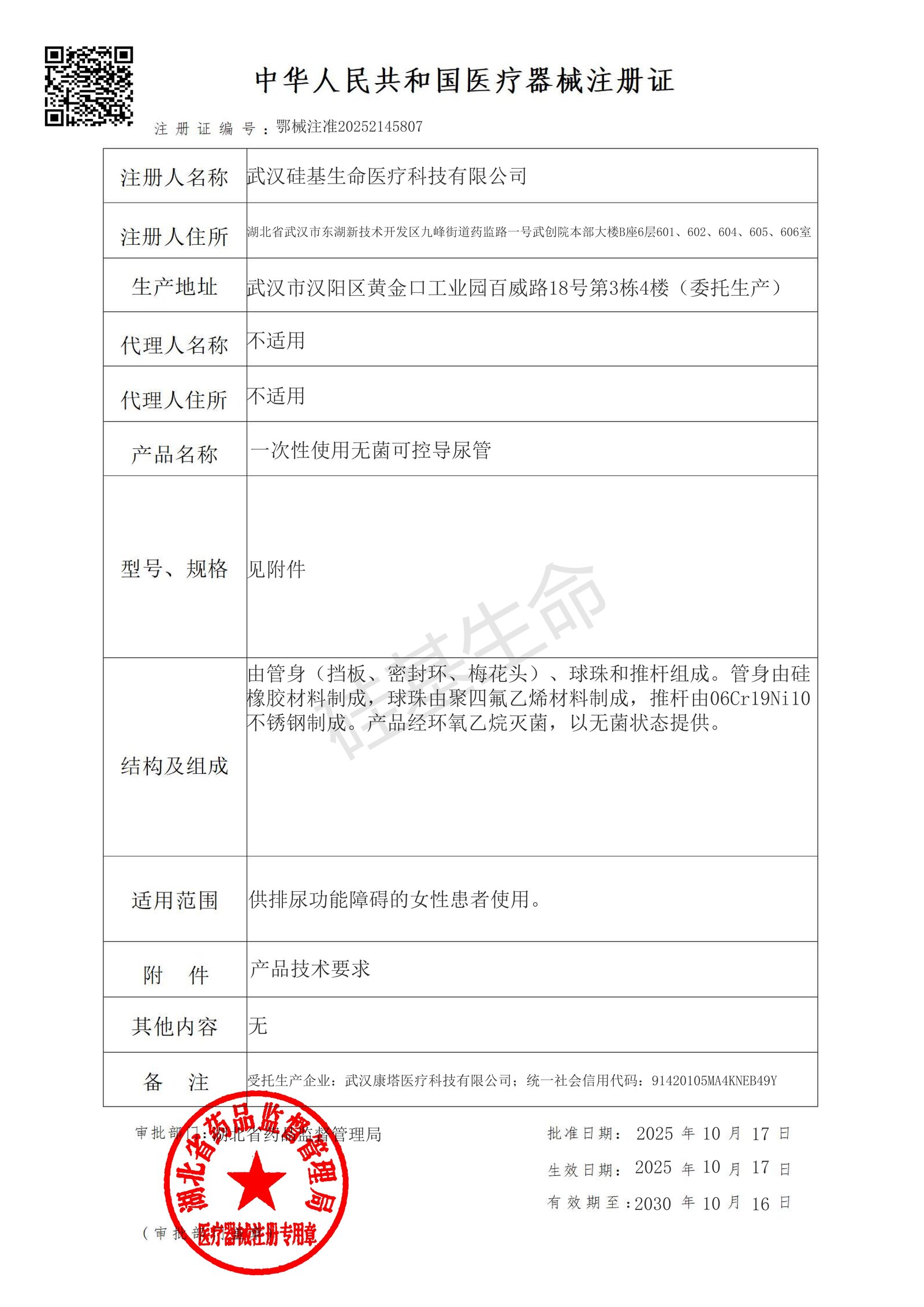
- Market
- People’s Republic of China
- Authority
- Hubei Medical Products Administration (NMPA framework)
- Indication
- Female patients with voiding dysfunction
- Reg. no.
- 鄂械注准20252145807
- Valid until
- 16 Oct 2030
- Design
- Interventional, single-centre, single-arm
- Site
- Tongji Hospital, Wuhan · January – June 2025
- Participants
- 23 women enrolled · 19 completed
- Follow-up
- One catheter per participant for 30 days
18 of 19 participants who completed the study met the prespecified convenience and comfort threshold. 4 participants withdrew after the catheter dislodged or was removed because of discomfort; the events were non-serious and resolved without sequelae. Only two catheter sizes were studied.
Study summary →Latest articles


Work with Silicon Life
We work with distributors, hospitals and research groups outside China. Choose the type of enquiry and it will reach the right team.