Consider a purchasing panel comparing an all-silicone offer, a silicone-coated latex offer and a catheter with an antimicrobial surface. The bids may use similar language about comfort, infection and extended use while referring to different constructions and evidence. Before scoring them, the panel needs a common record of what each supplier is actually claiming.
This review is for hospital procurement officers, clinical engineers and continence teams writing an adult indwelling urinary-catheter specification. It uses guidelines and published studies to build that record. It offers no universal material winner, vendor ranking or assumed outcome saving. The supplier worksheet is intended to support clinical and quality review of the offered configuration, alongside the hospital’s own requirements.
What is the difference between catheter substrates and coatings?
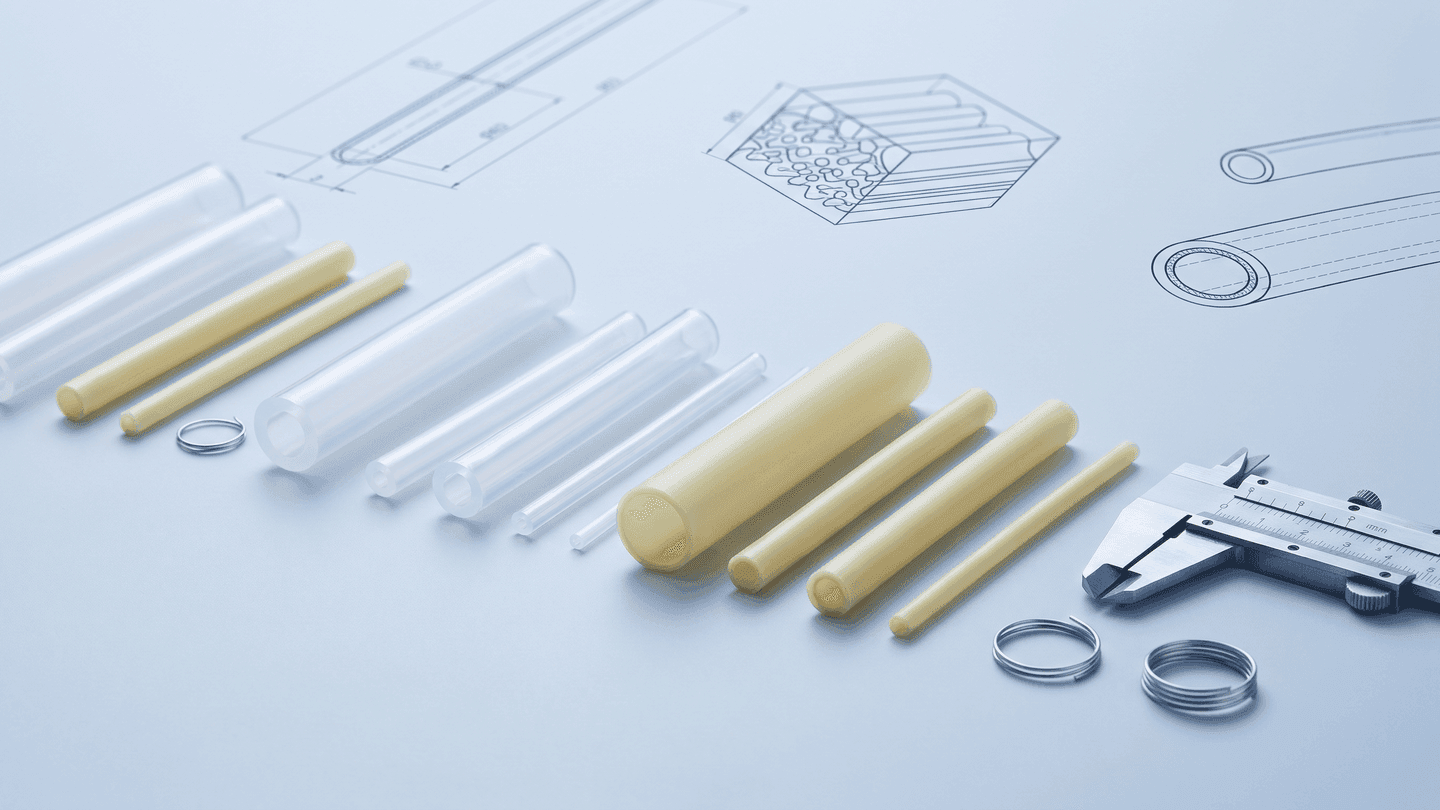
A substrate is the material forming the catheter body; a coating modifies its surface. Ask the supplier to name both for the exact catalogue number, including relevant components and packaging. “Silicone” alone is an incomplete purchasing description when it could mean an all-silicone body or silicone applied to a latex core.
Latex and its coatings: EAUN distinguishes uncoated latex from latex coated with silicone, hydrogel or polytetrafluoroethylene (PTFE). Its guidance recognizes differences in flexibility, surface behaviour and tolerance, while retaining the latex-allergy caution for the coated latex configurations.1
- Silicone-coated latex: specify the latex core and silicone surface separately.
- Hydrogel-coated latex: identify both the hydrophilic surface and the underlying latex.
- PTFE-coated latex: identify PTFE as the surface treatment; it does not make the core all-silicone.
Procurement implication: do not accept the surface treatment as evidence that natural rubber latex was absent from manufacture. Request a product-specific declaration and the actual label. If those conflict with the hospital’s allergy policy, resolve the discrepancy before treating the item as an eligible substitute.
US labeling example: FDA’s nonbinding 2014 guidance recommends the wording “Not made with natural rubber latex” when manufacturers elect to make an absence-of-use statement. It cautions against absolute “latex-free” claims and distinguishes a statement about a component from one covering the product, container and packaging.10 FDA’s separate presence-labeling guidance addresses natural rubber that contacts humans, including relevant packaging; it does not cover every synthetic rubber.11 These are US examples, not a worldwide label template or an allergy-safety certification.
All-silicone: confirm the construction rather than inferring it from colour, transparency or a trade name. Obtain the offered item’s lumen and component specifications as well as its material declaration. A category description does not establish the dimensions, coating chemistry or clinical performance of every supplier’s product.
| Offered configuration | Substrate / surface distinction | EAUN use category | Evidence request |
|---|---|---|---|
| Uncoated latex | Natural rubber latex body | Short-term: <14 days1 | Actual label, material declaration and intended-use instructions |
| Silicone-coated latex | Latex core; silicone surface | Long-term: >14 days1 | Core and coating declaration; do not treat the coating as absence of latex |
| Hydrogel-coated latex | Latex core; hydrophilic surface | Long-term: >14 days1 | Coating identity, latex statement and tolerance evidence |
| PTFE-coated latex | Latex core; PTFE surface | Long-term: >14 days1 | Exact construction and product-specific duration instructions |
| All-silicone | Silicone body; check any additional treatment | Long-term: >14 days1 | Component declaration and offered lumen / mechanical specifications |
| Alloy or antimicrobial treatment | Name substrate and active treatment independently | Short-term: <14 days in the EAUN table1 | Exact chemistry and study comparator; no equivalence across coating families |
Source: EAUN 2024, section 5.2.1 (reference 1). Procurement requests are author-proposed; the use categories are not product replacement limits.
Which duration and patient group does each material recommendation cover?
Time appears in supplier evidence in several different forms: the guideline’s use category, the intended duration at enrolment, the actual days observed, and the product’s labeled maximum use. Keep each in a separate field. A study of brief exposure does not establish a longer product claim merely because both are called “long-term”.
- EAUN material table: its short- and long-term categories use a 14-day split. The coating rows in Table 1 retain that source’s categories.1
- Cochrane review eligibility: the short-term review covers intended catheterisation of 14 days or less; the long-term review defines its population as more than 30 days.45
- Product instructions: record the supplier’s actual indication and duration statement separately, together with the document version and model to which it applies.
The distinction also matters when citing CDC. Recommendation III.O suggests a possible silicone advantage for encrustation in long-term catheter users with frequent obstruction. CDC labels it Category II, a weak recommendation that weighs benefits against harms.2
What the blockage evidence establishes: CDC’s Q3.2 appraisal describes low-quality evidence favouring silicone in people prone to blockage. It found no material difference among non-blockers, and no CAUTI outcome data for the obstruction question.3
A purchasing panel can therefore ask whether an encrustation claim addresses the same population and outcome. A general inpatient culture study cannot fill a missing recurrent-blockage endpoint. Conversely, the narrow CDC recommendation does not erase a different guideline’s broader material advice; the sources are answering different questions.
A guideline time category is not a regulatory ceiling, shelf-life validation or an instruction to keep every catheter in place for a fixed interval. Cooper and colleagues’ replacement-policy review found insufficient evidence to settle the best policy; its search ended in May 2016.9 Request product-specific support for a dwell-duration claim. Keep packaged shelf life, function during use and the clinical replacement policy separate in the evaluation record.
Does the study measure colonisation, encrustation or symptomatic CAUTI?
Classify each claimed outcome before comparing effects. The following distinctions help a panel request the right evidence without turning its purchasing review into a diagnostic protocol:
- Laboratory adherence or biofilm tests: request the test surface, organisms, exposure conditions and measurement method. An isolated surface test leaves patient outcomes unresolved.
- Clinical microbiology: record whether cultures came from urine or a catheter tip, when samples were taken, baseline exclusions and whether symptoms were assessed. Culture positivity alone does not demonstrate symptomatic CAUTI.
- Encrustation or obstruction: request the definition of blockage, the population’s prior obstruction history, actual exposure and early replacements.
- Symptomatic CAUTI and tolerance: request the study’s clinical case definition, ascertainment method, follow-up, denominators, discomfort and withdrawals. Studies using different outcome definitions may not support a direct comparison.
Verma and colleagues’ single-centre prospective observational study enrolled 50 pure-silicone users followed by 50 silicone-coated-latex users, rather than allocating at random. Urine was cultured on day six after five days of drainage. Table/Fig-1 reports positive cultures in 12/50 (24%) and 22/50 (44%), respectively. The biofilm test was performed on isolated organisms; it did not measure biofilm mass on the indwelling catheter.6
View chart data
| Category | Urine culture positive, sampled day six |
|---|---|
| Pure silicone (n=50) | 24 |
| Silicone-coated latex (n=50) | 44 |
Verma et al. 2016: 12/50 pure-silicone users and 22/50 silicone-coated-latex users had positive urine cultures sampled on day six. Sequential observational groups; this is not a symptomatic-CAUTI comparison.
Source: Verma et al., JCDR 2016, Table/Fig-1 (reference 6). Percentages recalculated from the published counts.
For the worksheet, classify that result as short-window microbiology evidence. It supports a question about colonisation under the reported conditions. It leaves symptomatic infection, long-term blockage and the offered product’s performance as separate questions. EAUN cites this same study; reading the guideline and the original paper does not create two independent replications.
The short-term Cochrane review by Lam and colleagues separates standard-material comparisons from antimicrobial and antiseptic configurations. This distinction prevents a coating result from being attributed solely to silicone. Its evidence search ended in September 2014.5
- Standard material comparisons: none of the trials comparing one standard catheter type with another measured symptomatic CAUTI. The absence of that endpoint cannot establish infection equivalence.5
- Silver alloy: the large symptomatic-CAUTI comparison used silver-alloy hydrogel-coated latex versus PTFE-coated latex and found no significant reduction.5
- Nitrofurazone: the comparison used nitrofurazone-impregnated silicone versus PTFE-coated latex. A small, borderline symptomatic-infection reduction accompanied greater discomfort during use and after removal. Both substrate and treatment differed.5
Ask the bidder to reproduce the exact outcome label in its claim register. If the evidence reports culture positivity, a proposed infection-prevention claim remains unsubstantiated by that result. If the study changes both substrate and coating, request a justification for any claim attributed to the substrate alone. Neither step requires pretending that an unmeasured outcome had a null result.
What do contrary findings and reporting discrepancies change?
Evidence appraisal should preserve findings that complicate a material preference. Tolerance, reporting consistency and the reason a catheter was selected can all change how a result applies to a purchasing decision.
Long-term tolerance: the CD004997.pub3 review included three small trials involving 102 adults. One comparison suggested fewer early removals with hydrogel-coated latex than silicone, a tolerance signal that does not establish a universal material ranking. The review identified important methodological weaknesses. Its search ended in March 2011; the current catalogue’s later publication label does not make that a current trial census.4 For purchasing, request tolerance and early-removal results alongside microbiology claims.
Check contradictory counts: Aurangzeb and colleagues’ 2024 study included 72 men with acute urinary retention and described even/odd sequence allocation. Its abstract reports 17/36 latex users with bacterial growth, while the results narrative says 19/36; the table’s positive organism rows total 17 and its percentage entries also contain errors. Withhold a comparative effect estimate pending clarification. This short male-only study cannot substantiate performance for a different population or device.7
Newer observational evidence: Reddy and colleagues’ 2026 prospective single-centre cohort reports material-associated differences, but its abstract distinguishes “culture-confirmed CAUTI” from a separate symptomatic endpoint. This review checked the abstract, not the full report, and does not reproduce its comparative rates.8 Request the complete endpoint definitions and allocation / adjustment methods. Observational associations warrant appraisal, while leaving selection effects and causal attribution unresolved.
What documentation should support each material claim in the RFQ?
Use this author-proposed worksheet as a starting point for a local RFQ review, rather than as a mandatory standard or validated clinical selection algorithm. For each row, add the offered catalogue number, supplier claim, source version, evidence gap, responsible reviewer and next action. Request a usable material declaration; a full proprietary formulation or bill of materials is not automatically necessary.
| Claim area | Supplier evidence to request | Applicability check | Gap or next action |
|---|---|---|---|
| Substrate / coating | Part-specific material declaration and actual label | Does the offered core match the description, separately from its surface? | Clarify ambiguous “silicone” naming before substitution |
| Natural rubber latex | Manufacturing statement with device, component and packaging scope | Does the declaration match the hospital’s allergy policy and applicable-market labeling? | Obtain a scoped statement; absence wording is not a safety certificate |
| Dwell duration | Current IFU and evidence supporting the stated duration for the offered configuration | Separate guideline category, actual study exposure and labeled use; keep shelf life separate | Request missing duration support rather than importing a guideline interval |
| Encrustation / blockage | Clinical report, obstruction definition, comparator and early-change data | Does a frequent-blocker claim concern long-term users with documented obstruction? | Do not extend that subgroup result to universal infection prevention |
| Colonisation / biofilm | Sampling schedule, allocation, culture endpoint and laboratory method | Urine or tip culture? Biofilm-producing isolates or a measured device surface? | Keep microbiology findings distinct from symptomatic infection claims |
| Coating efficacy / comfort | Exact substrate and active treatment, trial report and adverse outcomes | Are symptoms, discomfort and withdrawals reported for the claimed population? | Record complete-configuration effects; request evidence for broader claims |
| Mechanical applicability | Offered geometry, retention / drainage design and relevant performance report | Does the studied product share the features needed for the claimed benefit? | Explain transferability gaps; a shared substrate alone is insufficient |
Source: Author-proposed requests informed by references 1–11. No universal acceptance threshold, certification requirement or prescribed test method is asserted.
How should a buyer record uncertainty before accepting a material claim?
The panel can keep eligibility and claim substantiation as separate decisions. A device may meet documented purchasing requirements while an additional performance claim remains unsupported. Record that distinction explicitly instead of letting a persuasive comparative claim substitute for missing product documentation.
- Identify the offered configuration: record catalogue number, document version, core, surface treatment and relevant components. Check the actual item proposed for supply, including any permitted substitution.
- Assign evidence to the claim: keep each endpoint, population, comparator and exposure period together. A source about a coating family is background until its applicability to the offer is explained.
- Record the unresolved question: distinguish absent evidence, an outcome not measured, imprecise findings and contradictory reporting. Name the document or clarification needed to resolve each gap.
- Close the decision with a reviewer and reason: record whether the claim is supported within a defined scope, requires clarification or cannot be accepted on the submitted evidence. Set any further evaluation question before considering projected outcome savings.
Where Silicon Life fits
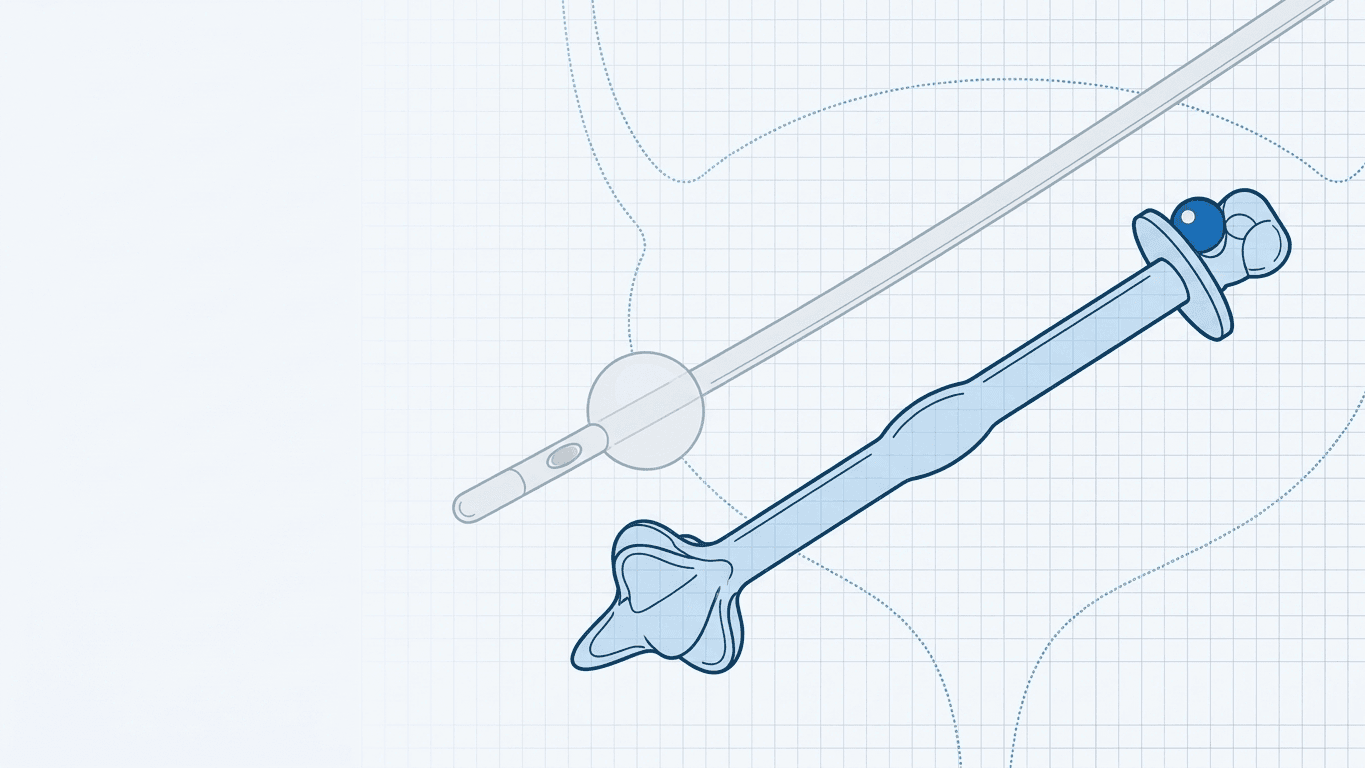
Publisher relationship: Silicon Life develops the balloon-free Disposable Sterile Controlled Catheter, with a silicone-rubber shaft and a PTFE ball-bead valve. Its shared substrate makes the distinction between material evidence and complete-device evidence relevant here; Foley studies do not establish its comparative infection, retention or comfort performance.12
The product is registered in China only as a Class II device (鄂械注准20252145807), for female patients with voiding dysfunction; it is not indicated for men or authorized for sale in other markets. The company-reported evidence is a single-centre, single-arm study: 23 enrolled, 19 completed, with four withdrawals after dislodgement or removal for discomfort. It provides no comparative proof of superiority.12
- Hospital teams can request the IFU, material declaration and study report through the controlled-catheter product page or a documentation enquiry. Keep its China-only Class II registration for female voiding dysfunction in view.
- The review of balloon-free retention and valve drainage addresses the separate retention / drainage question. Apply the same product-specific evidence discipline when moving from materials to mechanics.
Review scope, 26 October 2026: this is a focused narrative appraisal, not an exhaustive systematic search or meta-analysis. It uses the EAUN 2024 edition, CDC’s underlying 2009 guideline on pages dated 2024, the named historical reviews and selected primary studies. Review abstracts and included studies overlap in lineage. Revisit the worksheet when guidance, product instructions, relevant trials or published corrections change.
Frequently asked questions
Does silicone coating make a latex-core catheter suitable for latex-sensitive patients?
No. The coating does not change the core’s identity. Obtain the actual manufacturing declaration and label rather than inferring latex absence from the surface name. The allergy caution applies to coated latex in EAUN’s material table.1
Does lower bacterial colonisation prove fewer symptomatic infections?
No. First check which clinical outcome was measured. A culture result, a symptom-defined infection outcome and a laboratory biofilm test answer different questions. The chart above represents urine-culture positivity, not symptomatic-CAUTI incidence.
Is a guideline’s long-term category a manufacturer replacement interval?
No. Record the category definition and the product’s own labeled duration separately. Neither a guideline category nor a review’s eligibility cutoff validates the offered item for that period. The replacement-policy review also leaves substantial uncertainty about the best policy.9
Can a coating study isolate the clinical effect of silicone?
Check what changed between groups. A comparison changing substrate and active treatment together estimates the effect of the complete configurations. Isolating a component effect requires a design and comparator that support that attribution; a factorial design is one possible approach, not the only valid one.
Can Foley material studies substantiate claims for Silicon Life’s catheter?
A shared material can inform questions to ask, but it cannot establish clinical equivalence for different retention, drainage and intended-use configurations. Require evidence tied to the claimed benefit and offered device.
References
- 1European Association of Urology Nurses (EAUN). Indwelling catheterisation in adults – urethral and suprapubic (2024). Chapter 5: Equipment and products, section 5.2.1: Types of material and coating.
- 2Centers for Disease Control and Prevention (CDC). Guideline for Prevention of Catheter-Associated Urinary Tract Infections (2009): Summary of Recommendations, sections III.E, III.M and III.O (updated March 2024)
- 3Centers for Disease Control and Prevention (CDC). Guideline for Prevention of Catheter-Associated Urinary Tract Infections (2009): VIII. Evidence Review, questions Q2B and Q3.2 (updated April 2024)
- 4Jahn P, Beutner K, Langer G. Types of indwelling urinary catheters for long-term bladder drainage in adults. Cochrane review CD004997.pub3. Evidence search: 31 March 2011; catalogue publication dates differ.
- 5Lam TBL, Omar MI, Fisher E, Gillies K, MacLennan S. Types of indwelling urethral catheters for short-term catheterisation in hospitalised adults. Cochrane Database of Systematic Reviews. 2014;9:CD004013.pub4 (PMID: 25248140)
- 6Verma A, Bhani D, Tomar V, Bachhiwal R, Yadav S. Differences in Bacterial Colonization and Biofilm Formation Property of Uropathogens between the Two most Commonly used Indwelling Urinary Catheters. Journal of Clinical and Diagnostic Research. 2016;10(6):PC01–PC03
- 7Aurangzeb, Abrar M, Wattoo NA, et al. Comparison of latex and silicon indwelling catheter in terms of rate of bacterial colonization in males with acute urinary retention at 5th day of catheterization. J Ayub Med Coll Abbottabad. 2024;36(3):548–550. doi:10.55519/JAMC-03-13555.
- 8Reddy R, et al. Beyond catheter-associated urinary tract infection: A prospective study of infectious, noninfectious, and psychosocial risks of indwelling catheters. Urology Annals. 2026;18(2):148–156 (PMID: 42088138)
- 9Cooper FPM, Alexander CE, Sinha S, Omar MI. Policies for replacing long-term indwelling urinary catheters in adults. Cochrane Database of Systematic Reviews. 2016;7:CD011115.pub2
- 10US Food and Drug Administration (FDA). Recommendations for Labeling Medical Products to Inform Users that the Product or Product Container is not Made with Natural Rubber Latex: Guidance for Industry and Food and Drug Administration Staff. December 2014
- 11US Food and Drug Administration (FDA). User Labeling for Devices that Contain Natural Rubber (21 CFR 801.437); Small Entity Compliance Guide. April 2003
- 12Silicon Life. Disposable Sterile Controlled Catheter: company product information, China registration certificate and summary of the unpublished Tongji Hospital single-centre, single-arm study. Company source, not independent comparative evidence.
Silicon Life. Silicone vs latex urinary catheters: an evidence checklist for hospital procurement. SILICON·LIFE Insights. 26 October 2026.

Silicon Life develops urological devices and implantable systems in Wuhan, China. Its Insights are written for healthcare professionals, with the sources for each article listed in full.
This article is provided for educational purposes for healthcare professionals. It does not constitute medical advice and does not replace the Instructions for Use of any device. Product availability and indications differ by country.
New articles on urology devices and implant engineering.
Clinical reviews, engineering notes and company news from Silicon Life, sent when new articles are published.
Occasional emails. Unsubscribe at any time.