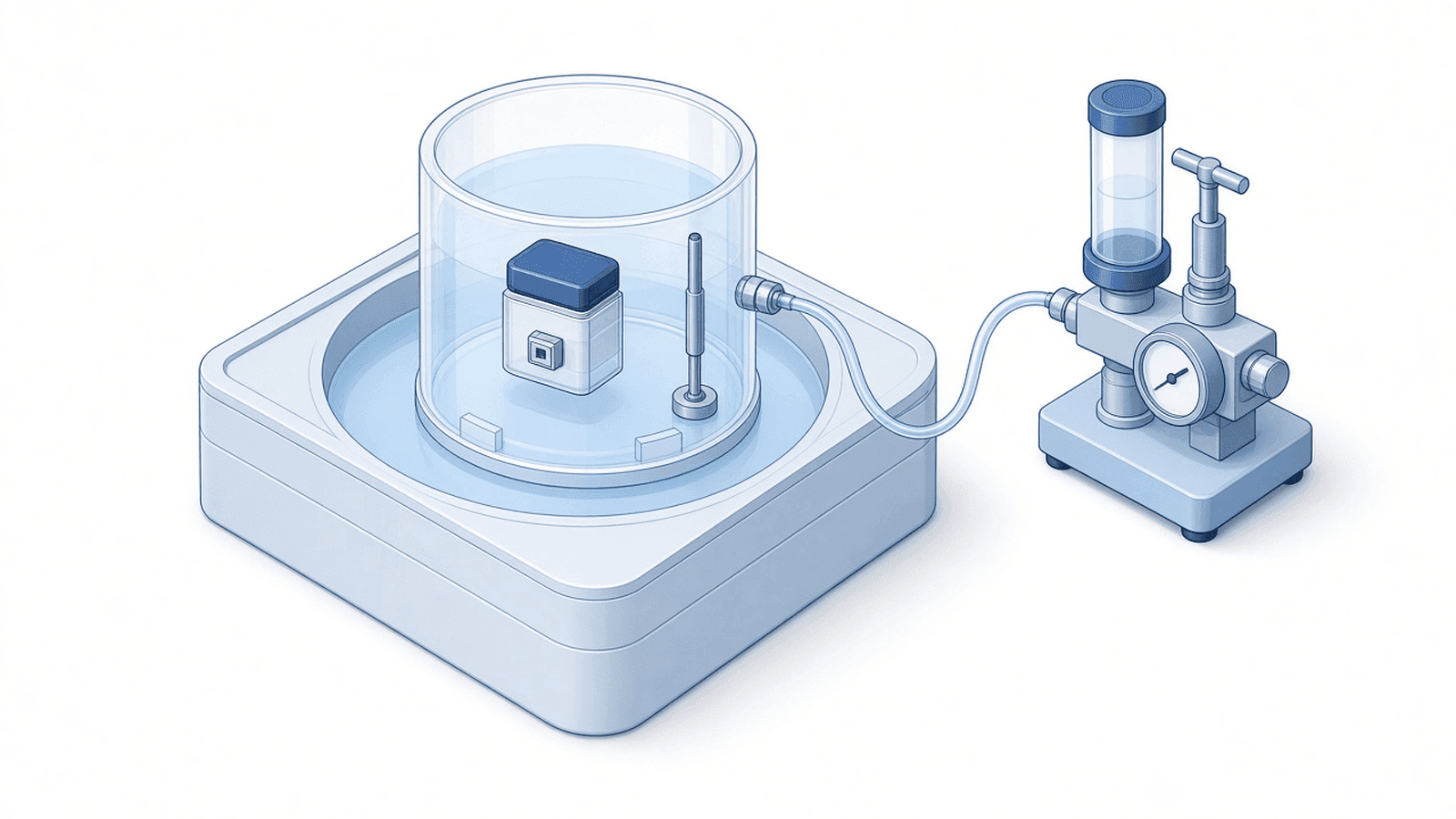

Pathophysiological Divide: Urine Storage Reflexes vs. Direct Bladder Evacuation
Storage, outlet and emptying are different design problems
The urinary tract needs to store urine and empty it with coordinated outlet behavior. A device that reduces urgency, a mechanical continence device and a system intended to assist evacuation act on different problems. The intended population and clinical objective should therefore be defined before selecting an actuator, retention mechanism or regulatory precedent 14 15 16.
Detrusor underactivity describes reduced contraction strength or duration associated with prolonged or incomplete emptying. Urodynamic indices help characterize function, with each value interpreted within the clinical assessment and intended device use. Abrams' discussion of contractility and voiding-efficiency indices is useful for defining the measurement; architecture selection requires the intended use and a system-level evidence plan 14 17.
Pressure also needs a population-specific interpretation. McGuire's study involved 42 myelodysplastic patients; among the 22 with leak-point pressure above 40 cm H2O, reflux and ureteral dilation were reported in 15 and 18 respectively. That historical association concerns the stated myelodysplasia cohort. Applying it to an actuator setpoint or another clinical population requires separate justification. A proposed device's pressure strategy needs its intended population, physiological behavior and risk analysis specified 18.
This functional distinction also changes what a test means. A reduction in leakage measures a different outcome from residual urine after voiding. A sensor's agreement with volume or pressure measurements is different again. Retain the clinical question and denominator beside each result, rather than combine them into a single claim of “bladder control.”
Mechanistic research has a defined evidentiary scope
Sacral neuromodulation has clinical evidence in selected non-obstructive urinary-retention patients. Jonas and colleagues reported outcomes after InterStim implantation, and Gross and colleagues later synthesized studies. Those findings concern the studied therapy and populations; they should not be transferred to another manufacturer's urge-incontinence-only device or to every form of denervation 19 20.
Wang and colleagues' bilateral pelvic nerve injury rat model described molecular changes and detrusor dysfunction over time, including extracellular-matrix remodeling and partial urodynamic recovery by day 28. It helps investigate injury biology. Its experimental question concerned the rat injury model; clinical neuromodulation outcomes, irreversibility and human actuator pressures require different studies. The distinction matters when using mechanistic work to justify a translational program 21.
Similarly, Barendrecht and colleagues' review questions the evidence supporting parasympathomimetics for underactive bladder and discusses frequent or potentially serious adverse effects. The appropriate implication here is that an engineering rationale needs a defined clinical evidence base; individual treatment selection remains a clinical assessment 22.
Clinical Catheterization Burden and the Unmet Need for Controlled Voiding
For clinical management of neurogenic emptying dysfunction, guidelines from the American Urological Association (AUA), Society of Urodynamics, Female Pelvic Medicine and Urogenital Reconstruction (SUFU), and European Association of Urology (EAU) discuss intermittent catheterization alongside patient capability, preferences and clinical circumstances 15 16. Intermittent catheterization (with frequency determined by the clinical care plan) avoids continuous indwelling foreign-body exposure and, when performed at clinically appropriate intervals, limits bladder overdistension 15 16.
However, longitudinal real-world adherence to CIC is compromised by physical and psychological burdens. In a registry analysis of spinal cord injury participants conducted by the Neurogenic Bladder Research Group (Patel et al., 2020), 176 of 1,479 participants had stopped CIC. Reported reasons included inconvenience, urinary leakage and too many urinary tract infections (UTIs) 23. The registry describes reported reasons for cessation; the subsequent drainage choice requires its own clinical context 23. In a separate observational study, Krebs et al. (2016) evaluated 1,104 patients with chronic neurogenic lower urinary tract dysfunction and demonstrated that indwelling transurethral catheterization exhibited the highest odds of symptomatic UTI compared to intermittent self-catheterization; the result concerns symptomatic UTI odds, without establishing all the additional complications for each individual 24. These studies make acceptance, comfort and the practical management burden relevant questions for drainage-device development. Chen’s intraurethral pump study and the separate magnetic-bladder prototype investigate different approaches to emptying assistance 6 9.
Authorization precedents: compare the route and labeled function
| Precedent / route | Decision date | Indication scope | Retention / emptying |
|---|---|---|---|
| InterStim P970004 + S004 / PMA | 1997-09-29; supplement 1999-04-15 | Original: urge incontinence; S004 adds retention and urgency/frequency after failed/intolerable conservative treatment | Yes, in S004 |
| Axonics P180046 / PMA | 2019-11-13 | Retention and OAB symptoms after failed/intolerable conservative treatment | Yes |
| Virtis P170001 / PMA | 2023-01-11 | Retention and OAB symptoms after failed/intolerable conservative treatment | Yes |
| eCoin P200036 / PMA | 2022-03-01 | Urgency urinary incontinence after specified conservative-treatment failure or successful PTNS trial | No retention indication |
| Neuspera P240031 / PMA | 2025-06-17 | Urge urinary incontinence after conservative failure/intolerance or when not a candidate | No retention indication |
| Altaviva P240011 / PMA | 2025-09-18 | Urge urinary incontinence after conservative failure/intolerance | No retention indication |
| Revi DEN220073 / De Novo | 2023-08-16 | Urgency incontinence alone or with urinary urgency | No retention indication |
| inFlow DEN130044 / De Novo | 2014-10-14 | Women ≥18 with incomplete emptying due to neurologic-origin detrusor contractility impairment | Specified female emptying population |
| VOCARE H980005 / HDE | 1998-12-28 | Clinically complete SCI, intact parasympathetic innervation, skeletally mature and neurologically stable; urination on demand and reduced residual | Specified SCI population |
Retention appears in the 1999 InterStim supplement; the four newer UUI decisions below authorize a different clinical function.
- Indications are abridged; read the linked decision for all conditions. Historical authorization does not establish present distribution.
Source: FDA PMA approval records P970004, P970004/S004, P180046, P170001, P200036, P240031, P240011; De Novo summaries DEN220073 and DEN130044; HDE H980005. Silicon Life analysis, November 2026.
The core FDA product-code search distinguishes original approvals, supplements, 510(k) clearances, De Novo grants and HDE approvals. These units answer different questions. A large supplement count indicates recorded lifecycle activity, whereas an original authorization establishes a particular device and indication. Their counts should remain separate from recall-product records 25 26 27 28 29.
For direct electrical evacuation, the retained PMA search under EZT/GZD found no original PMA. The historical record nevertheless includes the VOCARE bladder system, H980005, under product code PAT and the HDE route. The FDA's safety/probable-benefit summary dates its approval to December 1998. This precedent belongs in the account even though it is absent from a PMA-only count. Current commercial distribution requires separate confirmation 29 30 31.
The sacral anterior root stimulation literature describes the interaction of stimulation, outlet behavior and surgical management in selected spinal-injury patients. Brindley's clinical series and Guiho's systematic review provide that history; they are distinct from current storage-neuromodulation devices and from an artificial bladder replacing muscular work. Guiho describes sacral anterior root stimulation as coupled with sacral deafferentation and reports declining implantation with complication rates and alternative treatments, including botulinum toxin. The deafferentation and its patient-selection implications belong in a comparison with a reversible neuromodulation strategy 32 33.
Boger and colleagues also investigated combined electrical pudendal-nerve block and sacral-root stimulation. Such research illustrates that activating the bladder and managing outlet resistance are coupled problems. It supplies an experimental precedent, not authorization or clinical evidence for the separate investigational systems described later 34.
PMA lifecycle records are a separate measure
View chart data
| Category | 30-Day Manufacturing Notices (OK30) | Original and supplement decisions (APPR) |
|---|---|---|
| P970004 (Medtronic InterStim Urinary, EZW) | 315 | 134 |
| P080025 (Medtronic InterStim Fecal, QON) | 270 | 80 |
| P000053 (Boston Sci AMS 800 AUS, EZY) | 94 | 42 |
| N970012 (Boston Sci AMS 700 IPP, JCW) | 92 | 40 |
| P180046 (Axonics SNM Urinary, EZW) | 66 | 38 |
| P190006 (Axonics SNM Fecal, QON) | 66 | 38 |
| P000006 (Coloplast Titan IPP, FHW) | 35 | 35 |
| P240011 (Medtronic Altaviva Tibial, QPT) | 11 | 5 |
| P200036 (Boston Sci eCoin Tibial, QPT) | 3 | 8 |
| P240031 (Neuspera Wireless SNM, EZW) | 1 | 4 |
InterStim urinary and fecal programs have the most lifecycle records in this selected snapshot; original approvals and supplements remain distinct from independent treatment options.
- Retained October2026 PMA snapshot. Counts are lifecycle records, not independent devices or clinical options.
Source: US FDA Premarket Approval (PMA) Database (through October 2026). SILICON·LIFE analysis.
The chart separates the retained PMA decision codes OK30 and APPR by program. These are administrative categories; APPR contains original and supplement decisions, a lifecycle measure that should retain that label. The fecal-incontinence programs are explicitly identified and are not added to a urinary-treatment total. The displayed decision codes preserve the administrative distinctions in the snapshot 26.
A developer can use the record to locate the original approval and subsequent changes relevant to a comparison. Current labeling, SSEDs and specific decisions supply the device information needed to compare size, power, MRI conditions and clinical use. A program-level count serves mainly as a route into those records.
Power architecture, MRI assessment and the actual indication
Power architecture is a comparison of trade-offs
Implant programs use primary batteries, rechargeable batteries and external powering. Each shifts the burden among implant size, replacement surgery, charging or external-device use. The appropriate comparison needs current device-specific labeling and the intended patient's ability to manage the system. A generic PMA database row lacks the detail needed to verify a particular dimension, charge interval or longevity claim 26 28.
ISO/TS 10974:2018 covers implantable parts of active devices for 1.5 T cylindrical-bore whole-body MR scanners at approximately 64 MHz with whole-body coil excitation. Its type tests characterize MR interactions to support MR Conditional labeling, rather than routine production testing. Its scope excludes non-implantable parts and is limited to devices without sensing or with sensing programmed not to affect therapy delivery during the scan. A proposed closed-loop system therefore needs its sensing state and scanner conditions checked before treating these methods as applicable. Retrieve the actual system labeling and assessment for the complete implanted configuration 35.
The engineering question is how the source of energy, controls and sensing interact during normal use and plausible faults. An externally powered implant depends on coupling and user workflow. A rechargeable implant needs an appropriate charging arrangement. A long-lived primary cell trades charging tasks against energy budget and eventual replacement. These are design considerations, not measured rankings of the commercial products.
Indication Scopes: Urge Urinary Incontinence vs. Non-Obstructive Urinary Retention
The cited FDA decisions distinguish indication scope across neuromodulation platforms 5 36 37 1 2 3 4. While full-size sacral neuromodulation devices (InterStim, Axonics, Virtis) hold regulatory indications covering both storage dysfunction (urge incontinence and urgency-frequency) and non-obstructive urinary retention, the named newer systems below have urge-incontinence indications that need separate assessment 5 36 37.
Specifically, the FDA approval orders and decision summaries for Neuspera Medical (P240031, approved June 17, 2025), Boston Scientific eCoin (P200036, approved March 1, 2022), Medtronic Altaviva (P240011, approved September 18, 2025), and BlueWind Medical Revi (DEN220073, granted August 16, 2023) restrict their indications strictly to urge urinary incontinence 1 2 3 4. For a proposed retention indication, our clinical-engineering recommendation is to define the intended emptying benefit, residual-urine outcomes and outlet-coordination risks in the study plan; the existing retention literature supplies therapy-specific context 19 20.
Recall records: descriptive evidence, with the grouping disclosed
| Group | Product records | Author-defined actions | Basis |
|---|---|---|---|
| Active neuro-urology | 9 | 9 | Exact firm, initiation date and reason |
| Mechanical prostheses | 57 | 22 | Exact firm, initiation date and reason |
| Other selected drainage/nonimplant codes | 341 | 67 | Exact firm, initiation date and reason |
Mechanical-prosthesis records consolidate from 57 products to 22 exact-text groups; category totals still describe records rather than clinical failure rates.
- exact (recalling_firm, event_date_initiated, reason_for_recall); author-defined actions, not FDA event IDs
Source: US FDA Medical Device Recall Database (through July 2026). SILICON·LIFE analysis.
The retained July 24, 2026 FDA recall extract contains 407 product records matching the 26 original selected codes; adding PAT identifies no additional recall row. For a reproducible descriptive view, this report groups exact matches on recalling firm, initiation date and reason text. This is an author-defined action grouping, not an FDA event-identifier field 38.
The active-neuro-urology records are all EZW-coded and concentrate on Medtronic external accessories, software or procedural items. Mechanical-prosthesis configurations can share a reason; one Coloplast reason is recorded as “XXX” and remains a separate exact-text group. Other-code results principally concern drainage/catheter products. These mixed contents matter when selecting a relevant record to inspect. 38
Official root-cause labels remain as recorded. For the active group these include three Software design actions and one each under Software change control, Software Design Change, Process control, Under Investigation by firm, Device Design and Other. The mechanical group includes four actions each under Other, Nonconforming Material/Component and Process control; these examples retain the source labels without assigning a new engineering cause 38.
Two features affect interpretation. First, many product rows from one action can dominate a percentage. Second, an exact-reason grouping can still split an operational event where text differs or a placeholder appears. It should be called what it is. The grouping is useful for navigating records, without estimating clinical reliability, implant integrity or the probability of a future failure.
The individual reason text is the next source to read before deriving an engineering response. An external programmer issue concerns the affected accessory and behavior; implant reliability needs its own evidence. A labeling or component mix-up should retain its recorded cause even where the affected device contains a pump. An engineering response should follow the affected item, reported behavior and applicable system risk assessment.
Sensing, actuation and thermal evidence for a closed-loop system
A closed-loop bladder concept needs to link a measured state to an appropriate action, and then verify the result. The sensor, control algorithm, actuator, energy supply and clinical interface should therefore be evaluated together. A low short-term sensor error is a component result; a chronic system also needs evidence across the intended filling/emptying conditions, duration and population.
What the published prototypes demonstrate
Mickle's wireless optogenetic system was studied in female Sprague Dawley rats, with implantation assessed for up to one month. The paper reports contacting-tissue temperature increases below 1 °C after one hour of constant micro-LED illumination. Separately, its wireless-power system operates at 13.56 MHz, with supercapacitor charging in about 30 seconds when the transmitter outputs 4 W. The paper's thermal paragraph does not identify that 4 W charging condition as the thermal experiment's condition; carrying the two results together therefore requires keeping their distinct experimental contexts visible 8.
Arab Hassani's sensing/actuation work reports NiTi spring and wire transition temperatures of 45 °C and 70 °C respectively. Those are actuator-material temperatures. The in-vivo demonstration involved three anesthetized rats and reported 71–100% voiding efficiency; it does not report corresponding bladder-contact surface or tissue temperatures. A material transition and an organ-level voiding result answer different questions, so a safety comparison needs an additional tissue-temperature measurement under the intended operating cycle 7.
Yang's magnetic robotic bladder was evaluated in female Bama mini pigs over 14 days. A hand-positioned NdFeB N52 permanent magnet supplied external actuation, with an in-vivo separation of about 2.14 cm. Reported pressure changes were 40.90 ± 11.62 cm H2O on day 7 and 35.55 ± 6.04 cm H2O on day 14 (means ± SD). Animals underwent repeated measurements; the number of independent pigs underlying these summaries was not established from the accessible main text. Interpret the SD alongside that unresolved biological-replication denominator. The model used S2–S4 transection and a relaxed outlet; translation to another outlet condition, including human dyssynergia, needs its own assessment. The paper reports no thermal-rise measurement. Absence of implanted electrical current describes the architecture, while the measured mechanical behavior and relevant tissue safety remain separate evidence questions 9.
These are distinct animal experiments. The micro-LED tissue result, NiTi transition temperatures and magnetically generated bladder pressures cannot be plotted on a common safety axis. For a development team, each suggests a different test request: tissue temperature with a defined illumination or powering cycle; tissue exposure during shape-memory activation; or pressure, deformation and outlet response during external magnetic actuation. Duration also matters: a one-hour observation and a 14-day implant experiment leave different follow-up questions from a chronic intended use.
Sensing requires a reference and a defined error calculation. Calibration can depend on bladder geometry, placement, movement and changes over time. Wang's injury-model paper investigates detrusor biology; it supplies no validation of a chronic sensor-recalibration algorithm. A proposed adaptive algorithm needs evaluation with its own reference measurements, operating range, failure behavior and follow-up period 21.
Standards scope and the evidence a program needs
| Evidence | Reported value and conditions | Interpretation |
|---|---|---|
| Mickle 2019 | Contacting tissue rise <1 °C after 1 h constant micro-LED illumination; rats, implants assessed up to 1 month | Separately: 13.56 MHz powering; ~30 s charging at 4 W transmitter output. Thermal paragraph does not identify 4 W as its test condition. |
| Arab Hassani 2020 | NiTi spring/wire transitions 45/70 °C; 71–100% voiding in 3 anesthetized rats | Material transition, not tissue temperature; surface/tissue temperature not reported. |
| Yang 2022 | NdFeB N52 external magnet ~2.14 cm away; 14-day mini-pig implant; pressure change day 7: 40.90±11.62, day 14: 35.55±6.04 cm H2O (means ± SD; independent animal count not established from accessible main text) | S2–S4 transection model; thermal rise not reported. Repeated measurements are not independent animals. |
| Silicon Life investigational valve | Company reports bench heating within 2 °C | Measurement conditions and duration unpublished on page; separate from marketed manual catheter. |
Only Mickle reports the tissue-temperature rise shown here; actuator temperatures and bladder pressures answer separate engineering questions.
- No conformity or cross-study safety ranking. ISO catalogue entries establish scope, not a reproduced normative threshold.
Source: Mickle 2019: main text and Extended Data Fig. 3–4; Arab Hassani 2020: actuator characterization and in-vivo evaluation; Yang 2022: in-vivo validation; Silicon Life technology page. Silicon Life analysis, November 2026.
ISO 14708-1 and the neurostimulator-specific Part 3 are active-implant standards, with thermal and other safety provisions that must be read in their applicable context. Apply each voluntary consensus standard through the relevant jurisdiction and device assessment. The specific provision, allowed conditions and any relevant Part 3 modification need to be assessed for the proposed device; a conformity assessment needs the complete applicable provisions and corresponding test evidence 39 40.
China’s GB 16174.1-2024 was issued on August 23, 2024 and takes effect on September 1, 2027. The SAMR record identifies it as replacing GB 16174.1-2015 and as a modified adoption of ISO 14708-1:2014. Selecting an applicable national edition requires the actual registration context, rather than treating an announced future edition as already effective 13.
IEEE C95.1-2019 addresses general human exposure, with important exclusions: its limits are not intended for patients exposed under medical direction or informed volunteers in medical/scientific research, and may not protect medical devices or implants. It therefore supplies no general patient-exposure ceiling for the proposed wireless-power system. Assess the intended clinical exposure and device interaction through the applicable medical-device framework. MRI assessment is a separate use scenario with the ISO/TS 10974 scope described above 41 35.
The visual has four evidence rows: three distinct animal experiments and one company bench observation. Standards applicability is addressed separately in this section. Silicon Life reports valve heating within 2 °C for an investigational artificial-bladder valve. That company-reported bench observation belongs to the investigational valve; its conditions need examination for any system-level assessment. The marketed catheter contains a manual valve and no active implant electronics 12.
For a development review, ask which normal and fault conditions have been tested, how duration and cumulative use are represented, and where temperature or field exposure is measured. Those questions turn an attractive component result into a testable system-evidence plan without prescribing an unsupported numerical cutoff.
China NMPA Landscape and Commercial vs. Pipeline Profile of SILICON·LIFE
| Category | Domestic matched records | Imported matched records | Coverage |
|---|---|---|---|
| Kit/tray | 283 | Not separately extracted | Domestic kit branch |
| General/other catheter | 227 | 15 | Domestic excludes earlier branches; imported catheter branch is broader |
| Pelvic-floor rule | 61 | 0 | Same compound keyword rule |
| Urodynamic rule | 39 | 6 | Domestic includes pressure-catheter terms; imported uses urodynamics (尿动力) |
| Hydrophilic | 30 | Not separately extracted | Domestic branch only |
| Cystostomy | 15 | 2 | First-match cystostomy (膀胱造瘘) branch |
| Sacral nerve | 10 | 6 | Includes components and accessories |
| Controlled catheter | 1 | Not separately extracted | Domestic controlled catheterization (可控导尿) branch |
The largest domestic match groups are kits and general catheters; separate import extraction rules limit direct category comparisons.
- Snapshots contain unpopulated issue/expiry fields. These counts do not establish active validity, installed units or market share.
Source: China National Medical Products Administration (NMPA) Registration Database (snapshots October 22 and 25, 2026). SILICON·LIFE analysis.
Census of Domestic and Imported Urological Device Registrations in China
An audit of the China National Medical Products Administration (NMPA) database snapshots from October 2026 (138,916 domestic records and 15,464 imported records) across eight urological keyword categories describes keyword-matched registration records 42:
- Urethral Catheterization Kits and Trays: 283 domestic matched records; the imported extraction has no separate kit category in this keyword search 42.
- Standard and Specialty Indwelling and Intermittent Catheters: 227 domestic registrations and 15 imported registrations held by international manufacturers, including Coloplast (SpeediCath, EasiCath), Teleflex, Wellspect, and ConvaTec 42.
- Pelvic Floor Rehabilitation Stimulators: 61 domestic matched records; no import match appears under the same pelvic-floor rule 42.
- Urodynamic Analyzers and Pressure-Sensing Catheters: 39 domestic registrations and 6 imported registrations, led by Laborie Medical Technologies (Goby system and T-DOC air-charged catheters) 42.
- Hydrophilic-Coated Catheters: 30 domestic Class II registrations 42.
- Suprapubic Cystostomy Kits: 15 domestic registrations and 2 imported registrations (uroVision and Urotech) 42.
- Sacral Neuromodulation and Monitoring: 10 domestic registrations and 6 imported registrations 42. The domestic segment comprises eight Class III sacral-neuromodulation system, component and accessory registrations divided between Beijing PINS Medical Co., Ltd. (PINS Medical) (five registrations covering pulse generators, sacral leads and recharge systems, including external patient programmer/charger registration 20233121440) and Hangzhou Chengnuo Medical Technology Co., Ltd. (GeneralStim) (three certificates for neurostimulators and leads), plus two Class II monitoring/external accessory certificates. PINS identifies the R831 programmer/charger as external equipment; class and implantation location are separate characteristics 42 43. Medtronic holds all six imported registrations (four Class III implantable certificates and two Class II programmer/extension certificates) 42.
- Controllable Drainage Catheter: One matched domestic Class II registration held by Wuhan Guiji Shengming Medical Technology Co., Ltd.; the imported extraction has no separate controlled-catheter category 42 11.
Registered product: disposable sterile controlled catheter
The registration certificate and product documentation describe the marketed device and its supporting evidence 10 11:
- Corporate Profile: Wuhan Guiji Shengming Medical Technology Co., Ltd. (SILICON·LIFE) was founded on November 23, 2023, located at 6F, Building B, No. 1 Yaojian Road, Jiufeng Street, East Lake High-Tech Development Zone, Wuhan, Hubei, China 11. Leadership includes Founder and Chairman Ling Qing, PhD, General Manager Wang Jing, Deputy General Manager Ma Wenxiang and R&D Director Wu Youlin 44.
- Marketed Commercial Device: The company holds Hubei MPA Class II registration certificate 20252145807 for its Disposable Sterile Controlled Catheter, approved on October 17, 2025, and valid through October 16, 2030 10.
- Structural Architecture: The device is a balloon-free indwelling catheter constructed from a medical-grade silicone shaft featuring a quatrefoil retention tip for bladder placement 11. It incorporates a polytetrafluoroethylene (PTFE) ball-bead valve in the bulged shaft segment, operated by squeezing the outer end of the catheter 11. The marketed catheter is operated mechanically by hand, without an electronic controller 11. The product lists 11 available models with effective lengths of 35, 45 or 55 mm and Fr 12, Fr 16 or Fr 20 sizes, including selected Max variants; availability follows the specific model list and is indicated for up to 30 days of indwelling use, replaced by a healthcare professional 11.
- Legal Clinical Indication: The device is approved strictly for bladder urine drainage in female patients with clinical voiding dysfunction 11. Male patients are listed under contraindications 11. The approved commercial scope described here is China only; no FDA, CE or ISO-mark claim is made 42 11.
- Clinical Feasibility Evidence: The clinical submission supporting Hubei registration 20252145807 was a single-center, single-arm study conducted at Tongji Hospital between January and June 2025 11. Twenty-three female patients were enrolled, of whom 19 completed the protocol 11. Four patients withdrew early (17.4%) due to catheter dislodgement or removal for local discomfort; these events were moderate, non-serious, resolved without sequelae, and were attributed by investigators to anatomical size mismatch with the two models evaluated 11. Among the 19 completers, 18 (94.7%; 95% CI 74.0%–99.9%) achieved a combined convenience and comfort score of 4 or higher, compared with the prespecified 70% target, with zero device-related adverse events reported among completing subjects 11. This feasibility trial was unblinded and non-randomized, with comparative superiority requiring an appropriate comparative study 11.
Investigational Pipeline Programs and Development Targets
In addition to its commercial Class II catheter, Silicon Life lists six investigational programs, all in development 45:
- BCI Electronic Artificial Bladder System: The company describes an investigational concept combining bladder-volume sensing, EEG intent decoding and an implanted electromagnetic pump. It differs from Yang’s externally magnetically compressed bladder prototype. Company targets include flexible-sensor measurement error ≤2%, dynamic bladder-volume estimation error ≤3%, EEG micturition-intent decoding accuracy ≥95%, and response latency ≤300 ms. Its pulse-switched valve uses a permanent magnet to maintain a state without continuous current; the company reports bench heating within 2 °C, with measurement conditions unpublished on the page. These are development targets and a company bench observation 45 12.
- Electronic Penile Support Device: An investigational mechatronic alternative to manual hydraulic inflatable penile prostheses, in development 45.
- Male Internal Controllable Catheter: An investigational catheter incorporating a mechanical pull-wire switch adapted to male urethral anatomy 45.
- Hydrophilic-Coated Controllable Catheter: In development 45.
- Antibacterial Catheter and Catheterization Kit: In development 45.
- Subcutaneous Electronic Injector: An external multi-needle dermal injector intended for premature ejaculation, described by the company as intended for Class II registration; the stated plan is not a regulator’s classification determination 45.
Strategic Regulatory Decision Framework: US Premarket Pathways for Controllable Catheters
The following route and test-planning discussion is editorial analysis. The cited classifications and substantial-equivalence provisions supply the regulatory framework for a device-specific assessment 46 47 48.
Assess the intended use, technology and predicate together
For a proposed catheter, compare the exact intended use and technology with a legally marketed predicate and the applicable classification. Under 807.100(b), the proposed device must have the same intended use as its predicate. Where technological characteristics differ, they must raise no different questions of safety and effectiveness, and the submitted information must demonstrate comparable safety and effectiveness, including clinical data when FDA deems it necessary. The absence of a motor or electronics alone does not guarantee substantial equivalence or a bench-only submission 46 48.
A manually operated valve catheter and the intraurethral insert with pump in 876.5140 are different technologies. The latter is a specific classification, not a synonym for every voiding-assist claim. A proposed device's predicate strategy, clinical-evidence needs and possible De Novo route require a device-specific assessment. 25 49 47.
Clinical Evidence and Human Acceptance Lessons from the Vesiflo inFlow De Novo Precedent
Sponsors considering an active voiding or valve claim must examine the clinical history of the historical inFlow authorization under 21 CFR 876.5140: the Vesiflo inFlow Intraurethral Valve-Pump (DEN130044, granted October 14, 2014) 49 47. The inFlow uses a silicone insert containing a magnetic-impeller pump, with multiple shaft lengths for the female urethra and six flexible retention fins. Its replacement interval is 29 days or less 49 47. When an external battery-powered handheld activator is held over the pubic region, magnetically coupled rotation activates the impeller to pump urine from the acontractile female bladder 49 47.
The pivotal clinical study supporting DEN130044—reported by Chen et al. (2005) across 18 centers—was a prospective, single-arm crossover trial comparing the inFlow against baseline Clean Intermittent Catheterization in women with acontractile or hypotonic bladders 6. A total of 273 women enrolled in the trial 6. However, 169 patients (61.9%) withdrew early, primarily due to initial urethral discomfort and pericatheter urine leakage during the early run-in and crossover phases 6. Only 77 patients successfully completed the inFlow treatment phase 6. Among completers, post-void residual volumes were comparable to CIC, and the Incontinence Quality of Life (I-QOL) total score improved by 25.9 points (p < 0.001) 6. Lynch’s separate 20-woman study reported quality-of-life scores changing from 59.6 to 5.0 at 12 months, mean urinary flow rate of 10.7 mL/s (range 9–16) and mean post-void residual urine of 3 mL (range 0–17), alongside three asymptomatic-bacteriuria cases and two UTIs. Those results concern that study’s participants and outcomes 50.
Chen’s withdrawals and FDA’s account of discomfort and leakage in the first two weeks make tolerability and retention in the study central to interpreting the result 6 49. For a proposed trial, sizing, tolerability and the handling of early withdrawal deserve explicit consideration. A specific coating or acclimation procedure needs its own evidence rather than a guarantee that it prevents withdrawal 6 49.
Keep special controls distinct from proposed test choices
For a device within 876.5140, the regulation calls for clinical testing documenting the device acceptance rate and adverse event profile in the intended population, as well as nonclinical performance evidence. Its enumerated testing covers urine flow, valve integrity, bladder-neck retention force, pump/valve endurance, encrustation, mechanical integrity, remote-control reliability and battery life. Labeling includes the maximum indwelling period. This summarizes selected controls; the complete regulation governs. The text should not be expanded into a universal 30-day test, one pressure value or one compulsory patient questionnaire for every design 47.
A test plan can link those categories to the device's intended duration and operating conditions. For example, a manufacturer might propose a repeated-cycle protocol and explain why its loading and duration represent use. That is a design-specific proposal, with acceptance criteria justified by the risk analysis and applicable requirements. Cycle counts, pressure controls, thermal responses and software choices need their device-specific rationale and applicable requirement identified.
Connect the claim to the next evidence request
The following table is an editorial development-planning aid. Its endpoint examples require a device-specific protocol, risk analysis and applicable regulatory assessment.
| Proposed claim | Reference or endpoint to define | Precedent and its practical use |
|---|---|---|
| Estimates bladder volume | Reference volume, error definition, range, placement and follow-up | The sensing papers show configuration-specific experiments; validate the proposed sensor and algorithm together. 7 8 |
| Assists bladder emptying | Starting condition, voided and residual volume, pressure and outlet response | Yang provides a defined animal actuation model; inFlow provides a human drainage-device precedent with a specific population. 9 49 |
| Improves convenience or comfort | Patient-reported instrument, completion population, withdrawals and assistance needed | Chen and Lynch illustrate why outcomes and tolerability need the study pathway and denominators alongside them. 6 50 |
| Controls tissue heating | Location, normal and fault conditions, operating cycle and duration | Mickle supplies a one-hour tissue observation; the relevant implant standards require a separate applicable-provision assessment. 8 39 40 |
| Remains usable after loss of power or communication | Safe state, user action, recovery and essential-function behavior | Recall reason text can identify an affected accessory or behavior to investigate; system architecture follows the proposed use and risk assessment. 38 |
A useful study-flow record identifies eligibility, sizing, training, attempted use, early withdrawal and the population contributing each endpoint. This makes a high completer outcome interpretable alongside early intolerance. In the inFlow example, the 273 enrolled women, 169 early withdrawals and 77 treatment-phase completers are part of the evidence, not interchangeable denominators. A subsequent study should explain the timing of withdrawals and how missing outcomes are handled in the analysis plan. 6
For a long-term sensing program, specify a reference method before choosing an accuracy target. Absolute volume error, relative error and a calibration fit describe different properties. Geometry and placement can change during filling and movement; an evaluation should describe the conditions sampled and the period over which calibration was assessed. If an adaptive algorithm changes the estimate, retain its version and the reference observations needed to evaluate that change. These are proposed evidence-design choices. A low error during initial calibration alone leaves later drift unresolved.
Endurance and retention likewise need the intended duration and loading conditions. A repeated-cycle test can address a mechanism, while encrustation, urine flow and user handling require their own relevant conditions. Selecting test duration and cycle count requires a reasoned connection to the proposed device and use. A cycle count without its fluid conditions, loading and functional acceptance definition cannot by itself characterize performance over an intended implant period.
For a comparison device, retrieve the decision that actually contains the relevant indication. InterStim’s 1997 original approval and its 1999 retention supplement demonstrate why an original-approval date alone can misstate a precedent. A development record should identify the proposed function, the comparison device’s actual technology, the unresolved question and the evidence proposed to answer it. That record makes a regulatory consultation or engineering collaboration more precise. 5 48
Conclusion
Define the function and population before drawing a regulatory or engineering analogy. Storage neuromodulation, a manual drainage catheter, an intraurethral pump and an investigational artificial bladder require different evidence. Historical HDE and De Novo precedents also show why one database or one route is an incomplete account.
The strongest next decision connects a specific uncertainty to evidence: tolerability to a study population and withdrawals, sensing to a reference and follow-up duration, thermal behavior to a measured location and operating condition, and market entry to the actual indication and technology. Keep registry counts descriptive and company targets separate from achieved results.
Clinical investigators, engineering collaborators and distribution partners can contact Silicon Life about its registered female catheter or clearly identified development programs. Product documentation and collaboration discussions should retain the China-only commercial scope and the investigational status of the pipeline.
Methodology, Data Lineage, and Analytical Scope
Regulatory Database Auditing and Snapshot Harmonization
This study audited primary regulatory databases across the United States and China, executed using deterministic search protocols 25 26 27 28 29 38 42:
- US FDA Product Classification Database: Audited August 24, 2026 snapshot covering 7,084 total product codes, with 565 codes under 21 CFR Part 876 (Gastroenterology-Urology Devices) 25 46. The search uses 26 selected codes for active neuro-urology, mechanical prostheses and urinary drainage, plus PAT for the historical VOCARE HDE precedent 25 29.
- US FDA Premarket Approval (PMA) Database: Audited October 21, 2026 snapshot (57,323 total decisions) 26. Queries extracted all original approvals and supplements (180-day, real-time, 135-day, 30-day notices) indexed under the 27 cohort codes 26.
- US FDA 510(k) and De Novo Databases: Audited October 21, 2026 snapshots covering 176,415 total records, isolating all clearances under the cohort codes 27 28.
- US FDA Humanitarian Device Exemption (HDE) Database: Audited October 2026 to identify authorized evacuation neuroprostheses, isolating H980005 (VOCARE Bladder System, product code PAT) 29 30.
- US FDA Recall Enterprise System Database: Audited July 24, 2026 snapshot (58,785 total recall records), extracting 407 product-level recall records across the 27-code cohort 38.
Recall Classification and Unique Action Deduplication Methodology
To prevent catalog configuration numbers from distorting failure analysis, recall records were deduplicated into unique recall actions 38. Individual product-recall numbers (Z-numbers) sharing the same recalling firm, initiation date, and exact reason for recall were collapsed into a single action 38. The exact-text grouping yields 9 active-neuro-urology, 22 mechanical-prosthesis and 67 other selected-code action groups. These are author-defined groups, not FDA event IDs. Official root-cause fields are retained, with no custom mechanical-versus-software recoding 38.
China NMPA Keyword Matching Protocols
China National Medical Products Administration registration records were audited using snapshots from October 22, 2026 (domestic database, 138,916 total records) and October 25, 2026 (imported database, 15,464 total records) 42. Records were matched using standardized Chinese medical device nomenclature keywords 42:
The domestic extraction uses first-match rules in this order: 骶神经 (sacral nerve); 可控导尿 (controlled catheterization); 盆底 (pelvic floor) with any of 刺激/康复/治疗/生物反馈 (stimulation/rehabilitation/treatment/biofeedback); 亲水 (hydrophilic) with 导尿 (catheterization); 导尿包 (catheterization kit) or 导尿 with 套件 (kit); 尿动力 (urodynamics) or 测压 (pressure measurement) with 导尿; 导尿管 (urinary catheter); 膀胱造瘘 (cystostomy). Each row enters the first matching category.
The imported extraction uses a different first-match sequence: 骶神经 (sacral nerve); the same compound pelvic-floor rule; 尿动力 (urodynamics); 导尿管 (urinary catheter); 膀胱造瘘 (cystostomy); 阴茎假体 (penile prosthesis) or 人工尿道括约肌 (artificial urinary sphincter). It has no separate hydrophilic, kit or controlled-catheter branch. Those categories therefore have “not separately extracted” import cells, rather than a fabricated zero. The domestic general-catheter count also excludes earlier branches, whereas the imported catheter branch can include them. Compare these counts only with their rule coverage visible. 42
Corporate and Preclinical Evidence Governance Boundaries
Corporate descriptions use the approved company profile and current site data, including the registered product, complete study block and development-target labels 42 11. Preclinical in vivo data from Yang et al. (2022), Wang et al. (2023), Arab Hassani et al. (2020), and Mickle et al. (2019) are cited by their verified published identities; the discussion preserves the preclinical and study-specific boundaries 21 7 8 9. Quantitative metrics for investigational pipeline devices are identified strictly as internal development targets, and company bench tests are identified as non-clinical engineering measurements 45 12.
References
- 1FDA. eCoin P200036 approval record, March 1, 2022.
- 2FDA. Revi DEN220073 decision summary, August 16, 2023.
- 3FDA. Neuspera P240031 approval record, June 17, 2025.
- 4FDA. Altaviva P240011 approval record, September 18, 2025.
- 5FDA. InterStim P970004/S004 indication supplement, April 15, 1999.
- 6Chen TY, Ponsot Y, Carmel M, Bouffard N, Kennelly MJ, Tu LM. Multi-centre study of intraurethral valve-pump catheter in women with a hypocontractile or acontractile bladder. (2005). PMID: 15964124.
- 7Arab Hassani F, Jin H, Yokota T, Someya T, Thakor NV. Soft sensors for a sensing-actuation system with high bladder voiding efficiency. (2020). PMID: 32494686.
- 8Mickle AD, Won SM, Noh KN, Yoon J, Meacham KW, Xue Y, McIlvried LA, Copits BA, Samineni VK, Crawford KE, Kim DH, Srivastava P, Kim BH, Min S, Shiuan Y, Yun Y, Payne MA, Zhang J, Jang H, Li Y, Lai HH, Huang Y, Park SI, Gereau RW, Rogers JA. A wireless closed-loop system for optogenetic peripheral neuromodulation. (2019). PMID: 30602791.
- 9Yang Y, Wang J, Wang L, Wu Q, Ling L, Yang Y, Ning S, Xie Y, Cao Q, Li L, Liu J, Ling Q, Zang J. Magnetic soft robotic bladder for assisted urination. (2022). PMID: 36001667.
- 10Hubei Medical Products Administration. Registration certificate 鄂械注准20252145807 (Hubei device registration), issued October 17, 2025. Issuer document reproduced by the registrant.
- 11Wuhan Guiji Shengming Medical Technology Co., Ltd. Corporate Profile, Hubei MPA Class II Registration Certificate 20252145807, and Technology Disclosures. Product description, model list, precautions and company-reported study results; 2025–2026.
- 12Silicon Life. Technology: pulse-switched valve, sensing and reported bench observations.
- 13Standardization Administration of China. National Standard GB 16174.1-2024: Active Implantable Medical Devices — Part 1: General Requirements for Safety, Marking and Information. Beijing: SAMR / SAC (effective September 1, 2027).
- 14Osman NI, Chapple CR, Abrams P, Dmochowski R, Haab F, Nitti V, Koelbl H, van Kerrebroeck P, Wein AJ. Detrusor underactivity and the underactive bladder: a new clinical entity? A review of current terminology, definitions, epidemiology, aetiology, and diagnosis. (2014). PMID: 24184024.
- 15Ginsberg DA, Boone TB, Cameron AP, Gousse A, Kaufman MR, Keays E, Kennelly MJ, Lemack GE, Rovner ES, Souter LH, Yang CC, Kraus SR. The AUA/SUFU Guideline on Adult Neurogenic Lower Urinary Tract Dysfunction: Diagnosis and Evaluation. (2021). PMID: 34495687.
- 16Sartori AM, Kessler TM, Castro-Díaz DM, de Keijzer P, Del Popolo G, Ecclestone H, Frings D, Groen J, Hamid R, Karsenty G, Musco S, Padilla-Fernández B, Pannek J, Schouten N, van der Vorm A, Blok BFM. Summary of the 2024 Update of the European Association of Urology Guidelines on Neurourology. (2024). PMID: 38594103.
- 17Abrams P. Bladder outlet obstruction index, bladder contractility index and bladder voiding efficiency: three simple indices to define bladder voiding function. (1999). PMID: 10444116.
- 18McGuire EJ, Woodside JR, Borden TA, Weiss RM. Prognostic value of urodynamic testing in myelodysplastic patients. (1981). PMID: 7196460.
- 19Jonas U, Fowler CJ, Chancellor MB, Elhilali MM, Fall M, Gajewski JB, Grünewald V, Hassouna MM, Hombergh U, Janknegt R, van Kerrebroeck PE, Lylcklama a Nijeholt AA, Siegel SW, Schmidt RA. Efficacy of sacral nerve stimulation for urinary retention: results 18 months after implantation. (2001). PMID: 11125353.
- 20Gross C, Habli M, Lindsell C, South M. Sacral neuromodulation for nonobstructive urinary retention: a meta-analysis. (2010). PMID: 22453352.
- 21Wang J, Ren L, Liu X, Xu W, Liu M, Hu P, Wang T, Liu J, Ling Q. Transcriptomics Reveals Molecular Features of the Bilateral Pelvic Nerve Injury Rat Model of Detrusor Underactivity. (2023). PMID: 37627325.
- 22Barendrecht MM, Oelke M, Laguna MP, Michel MC. Is the use of parasympathomimetics for treating an underactive urinary bladder evidence-based? (2007). PMID: 17233798.
- 23Patel DP, Herrick JS, Stoffel JT, Elliott SP, Lenherr SM, Presson AP, Welk B, Jha A, Myers JB, Neurogenic Bladder Research Group (NBRG.org). Reasons for cessation of clean intermittent catheterization after spinal cord injury: Results from the Neurogenic Bladder Research Group spinal cord injury registry. (2020). PMID: 31578784.
- 24Krebs J, Wöllner J, Pannek J. Risk factors for symptomatic urinary tract infections in individuals with chronic neurogenic lower urinary tract dysfunction. (2016). PMID: 26620878.
- 25US Food and Drug Administration. Product Classification Database. CDRH product classification registry covering 21 CFR Part 876 (Gastroenterology-Urology Devices) and related neurological codes (verified snapshot August 24, 2026).
- 26US Food and Drug Administration. Premarket Approval (PMA) Database. CDRH database tracking original approvals and supplements across active implantable neuro-urology and prosthetics (verified snapshot October 21, 2026).
- 27US Food and Drug Administration. 510(k) Premarket Notification Database. CDRH database of substantial equivalence clearances across urological catheter and pelvic stimulation codes (verified snapshot October 21, 2026).
- 28US Food and Drug Administration. De Novo Classification Database. CDRH database of novel low-to-moderate-risk granted devices, including DEN130044 (inFlow, PIH) and DEN220073 (Revi, QXM) (verified snapshot October 21, 2026).
- 29US Food and Drug Administration. Humanitarian Device Exemption (HDE) Database. CDRH database of authorized humanitarian devices, including H980005 (VOCARE Bladder System, product code PAT) (verified snapshot October 2026).
- 30US Food and Drug Administration. Summary of Safety and Probable Benefit for H980005: VOCARE Bladder System. Rockville: CDRH, approved December 28, 1998.
- 31National Archives and Records Administration. 21 CFR § 882.5850: Implanted Spinal Cord Stimulator for Bladder Evacuation. Electronic Code of Federal Regulations, 2026.
- 32Brindley GS, Polkey CE, Rushton DN, Cardozo L. Sacral anterior root stimulators for bladder control in paraplegia: the first 50 cases. (1986). PMID: 3491180.
- 33Guiho T, Azevedo-Coste C, Bauchet L, Delleci C, Vignes JR, Guiraud D, Fattal C. Sacral Anterior Root Stimulation and Visceral Function Outcomes in Spinal Cord Injury-A Systematic Review of the Literature Over Four Decades. (2022). PMID: 34547528.
- 34Boger A, Bhadra N, Gustafson KJ. Bladder voiding by combined high frequency electrical pudendal nerve block and sacral root stimulation. (2008). PMID: 18041769.
- 35International Organization for Standardization. ISO/TS 10974:2018: Assessment of the safety of magnetic resonance imaging for patients with an active implantable medical device. Geneva: ISO, 2018.
- 36FDA. Axonics P180046 approval record, November 13, 2019.
- 37FDA. Virtis P170001 approval record, January 11, 2023.
- 38US Food and Drug Administration. Medical Device Recalls Database (Enforcement Reports). CDRH Recall Enterprise System recording classified recall actions and official root-cause determinations (verified snapshot July 24, 2026).
- 39International Organization for Standardization. ISO 14708-1:2014: Implants for surgery — Active implantable medical devices — Part 1: General requirements for safety, marking and for information to be provided by the manufacturer. Geneva: ISO, 2014. Catalogue scope; full normative provisions are not reproduced here.
- 40International Organization for Standardization. ISO 14708-3:2017: Implants for surgery — Active implantable medical devices — Part 3: Implantable neurostimulators. Geneva: ISO, 2017. Catalogue scope; full normative provisions are not reproduced here.
- 41Institute of Electrical and Electronics Engineers. IEEE Std C95.1-2019: IEEE Standard for Safety Levels with Respect to Human Exposure to Electric, Magnetic, and Electromagnetic Fields, 0 Hz to 300 GHz. New York: IEEE, 2019.
- 42National Medical Products Administration (China). Medical Device Registration Database. Official registry tracking domestic (N = 138,916) and imported (N = 15,464) medical device certificates (snapshots October 22 and 25, 2026).
- 43PINS Medical. R831 sacral nerve stimulation patient programmer/charger. April 22, 2024; manufacturer identifies the product as external equipment.
- 44Silicon Life. About: company and leadership.
- 45Silicon Life. Pipeline: investigational programs and development targets.
- 46National Archives and Records Administration. 21 CFR Part 876: Gastroenterology-Urology Devices. Electronic Code of Federal Regulations, 2026.
- 47National Archives and Records Administration. 21 CFR § 876.5140: Urethral insert with pump for bladder drainage. Electronic Code of Federal Regulations, 2026.
- 48National Archives and Records Administration. 21 CFR § 807.100 and § 807.81: Premarket Notification Substantial Equivalence and Changes Requiring 510(k). Electronic Code of Federal Regulations, 2026.
- 49US Food and Drug Administration. De Novo Decision Summary for DEN130044: Vesiflo inFlow Intraurethral Valve-Pump. Rockville: CDRH, granted October 14, 2014.
- 50Lynch WJ, Testa GA, Bell DF. The subjective and objective benefits of a remote-controlled intraurethral device for managing the female acontractile bladder. (2003). PMID: 14632855.
Silicon Life. Bladder Sensing, Voiding Assistance and Implant Engineering in 2026. SILICON·LIFE Insights. 9 November 2026.

Silicon Life develops urological devices and implantable systems in Wuhan, China. Its Insights are written for healthcare professionals, with the sources for each article listed in full.
This article is provided for educational purposes for healthcare professionals. It does not constitute medical advice and does not replace the Instructions for Use of any device. Product availability and indications differ by country.
New articles on urology devices and implant engineering.
Clinical reviews, engineering notes and company news from Silicon Life, sent when new articles are published.
Occasional emails. Unsubscribe at any time.